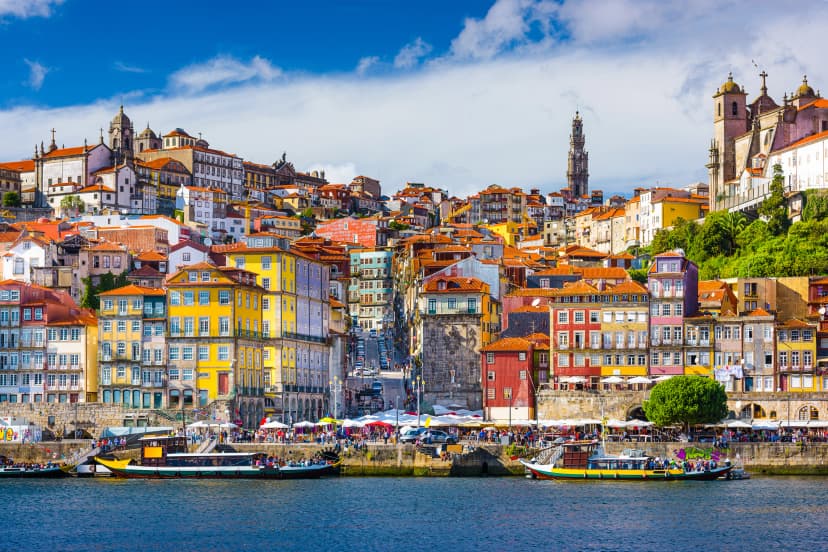
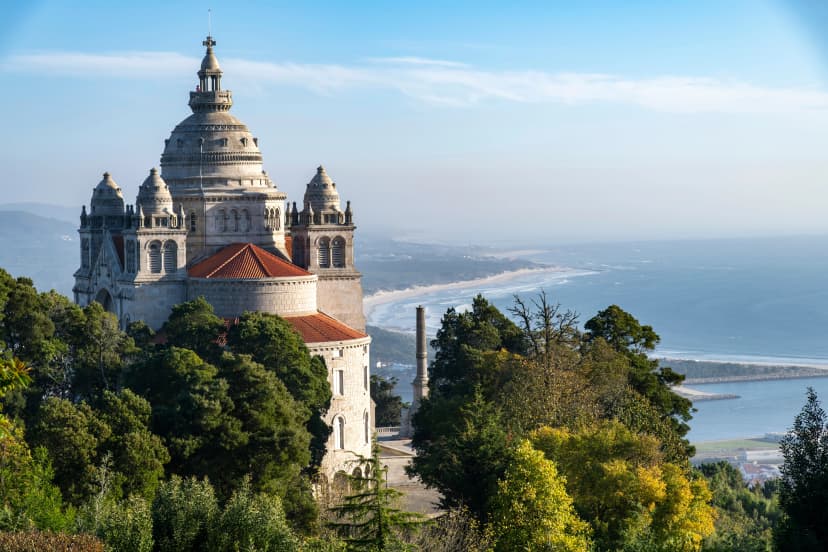
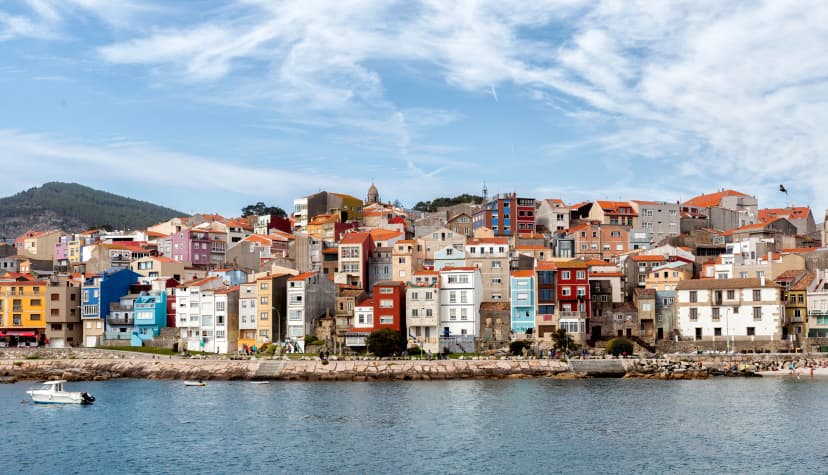
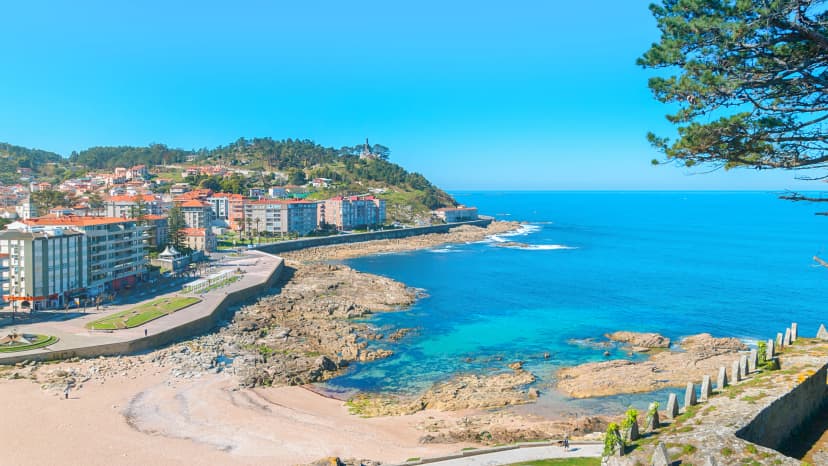
Camino Portugues (Coastal): The Ultimate Guide
Explore the Camino Portugues: an in-depth guide covering history, highlights, terrain, infrastructure, and starting points in Lisbon and Porto.
Quick links
Some Numbers
Length: 617 km (Central); 280 km (Coastal)
Starting point: Lisbon (Central); Porto (Coastal), Portugal
Finishing point: Santiago de Compostela, Spain
Duration: 25-30 days (from Lisbon); 12-14 days (from Porto)
Technical difficulty: 2/5 | Fitness level: 2/5
Ideal for: Those seeking coastal scenery, two-country experience, less crowded paths, and Portuguese culture
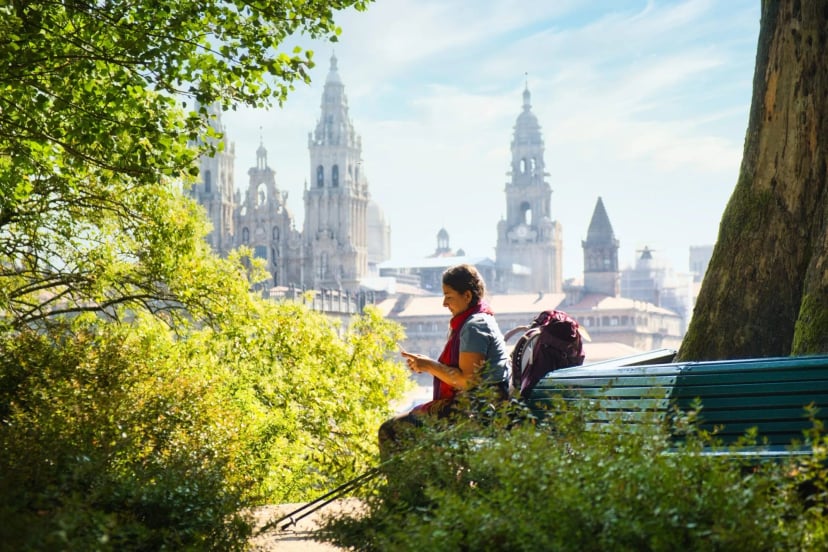
The Camino Portugues, or Portuguese Way, is a significant pilgrimage route leading to Santiago de Compostela in Spain. This route, second in popularity only to the Camino Frances, offers a unique blend of cultural and natural experiences that distinguish it from its more crowded French cousin.
Originating from Lisbon or Porto in Portugal, the Camino Portugues extends through varied landscapes, including rural countryside, coastal paths, and historic urban areas. Pilgrims on this path encounter a rich tapestry of history, exemplified by medieval architecture, ancient Roman roads, and significant religious sites. The route offers exceptional flexibility—pilgrims can choose between the traditional Central Route through Portuguese heartland or the increasingly popular Coastal Route following the Atlantic shoreline.
What makes the Camino Portugués truly special is its two-country experience. You'll walk through Portugal's historic cities, sample port wine in centuries-old cellars, feast on custard tarts and salt cod, then cross into Galicia to experience Spain's distinct culture, language, and cuisine. This international journey, combined with gentler terrain and less crowded paths than the Francés, creates an ideal pilgrimage for first-timers and experienced walkers alike.
Route Map & Starting Points
Not everyone walks from Lisbon. The Camino Portugués offers remarkable flexibility in starting points, allowing pilgrims to tailor their journey to available time, fitness level, and desired experience. Most pilgrims begin in Porto, though options range from the full month-long walk from Portugal's capital to the minimum qualifying distance from the Spanish border.
Popular Starting Points
Starting Point | Distance to Santiago | Typical Duration | Route Variant |
Lisbon (Central Route) | 617 km | 24-28 days | Central |
Porto (Central Route) | 240 km | 10-12 days | Central |
Porto (Coastal Route) | 280 km | 12-14 days | Coastal |
Tui/Valença (Last 100km) | 115 km | 5-6 days | Central |
Vigo (Coastal minimum) | 110 km | 5 days | Coastal |
A Guarda (Coastal) | 120 km | 5-6 days | Coastal |
Important Note: The Coastal Route offers flexibility—switch between the official Coastal Route and the Senda Litoral (maximum coastal variant) at multiple points. The routes also connect to the Central Route at Vila do Conde (30km from Porto) and Caminha (107km from Porto), allowing you to mix variants based on weather, preference, or whim.
Why Walk the Camino Portugués?
The Camino Portugués offers compelling advantages that make it increasingly popular among modern pilgrims. Understanding what distinguishes this route helps you decide if it matches your pilgrimage vision.
1. Two-Country Cultural Journey
The Camino Portugués provides something no Spanish route can match: the experience of walking through two distinctly different cultures, cuisines, and languages within a single pilgrimage. Portugal's warm Mediterranean character—slower pace, exceptional hospitality, seafood-centric cuisine—contrasts beautifully with Galicia's Celtic-influenced traditions, green hills, and rustic stone architecture. You'll order pasteis de nata and galão in Portuguese cafés, then switch to pulpo and Albariño in Galician taverns. This international dimension adds richness impossible on single-country routes.
2. Atlantic Coast Beauty
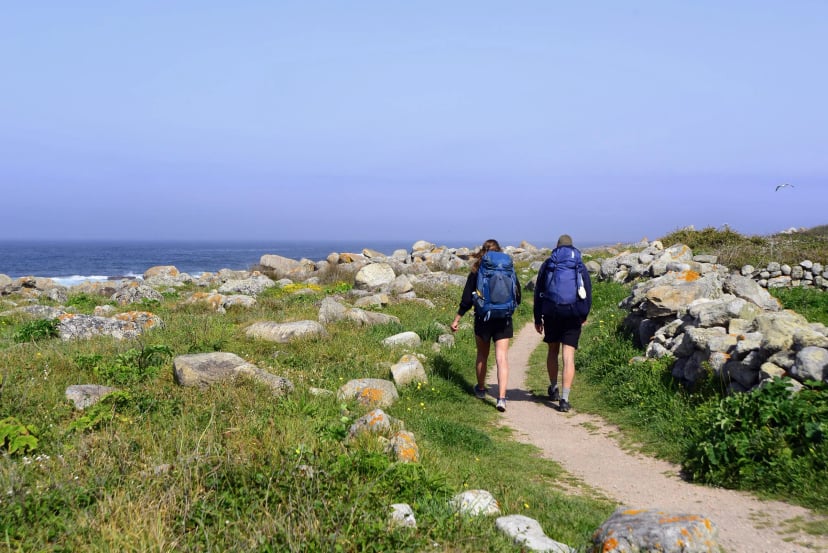
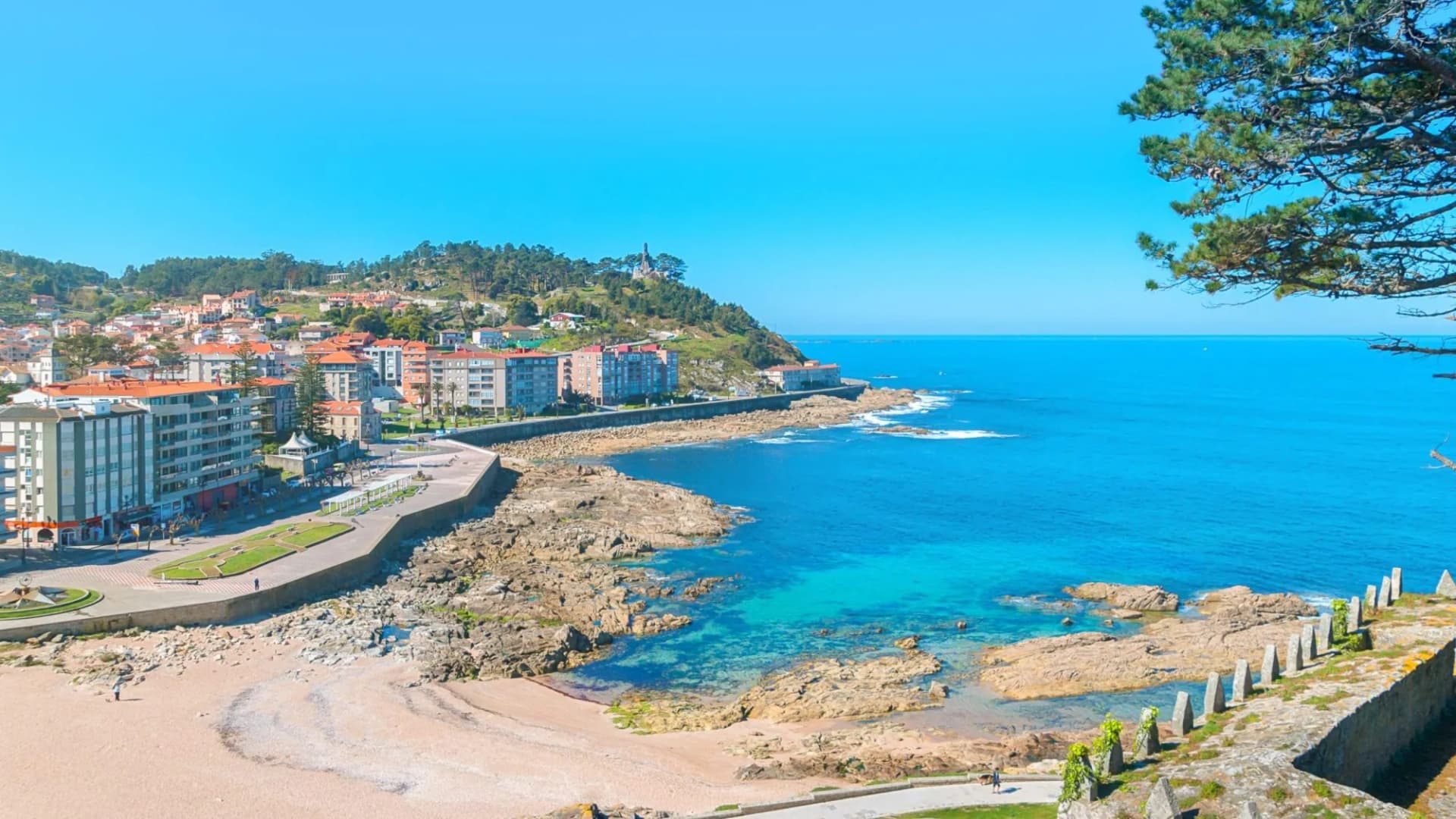
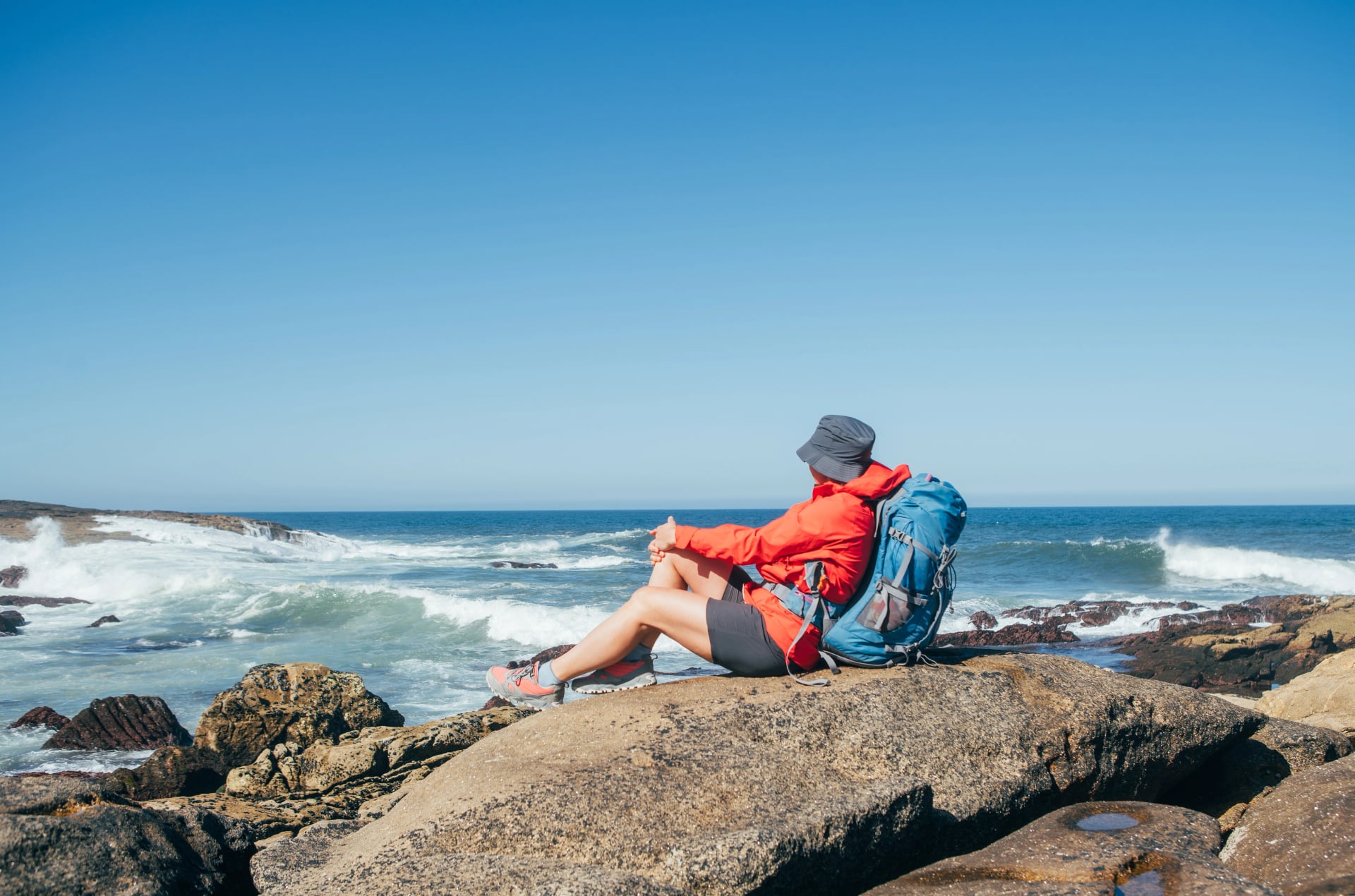
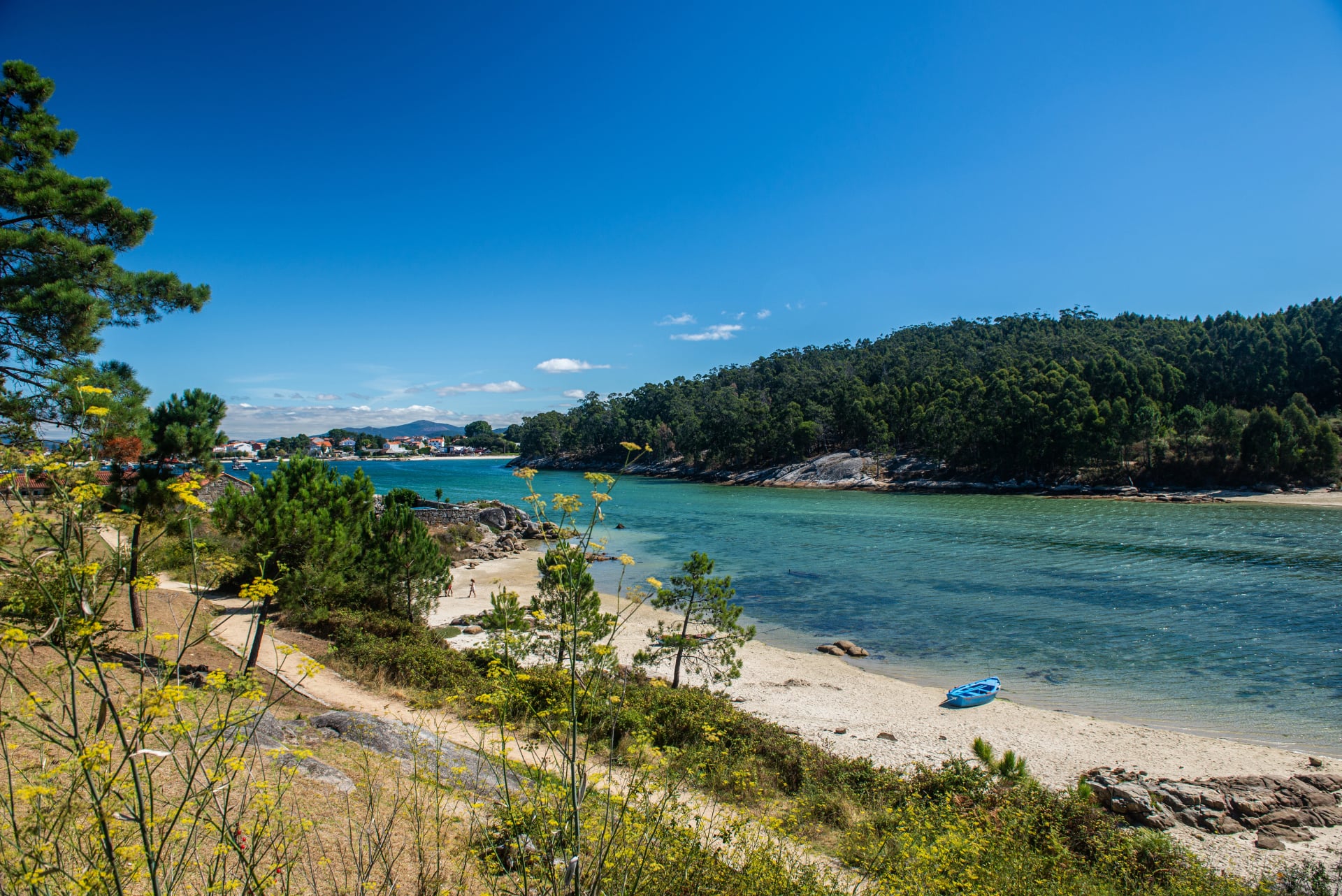
The Coastal variant delivers what its name promises: consistent ocean views, wooden boardwalks protecting pristine dunes, fishing villages maintaining centuries-old maritime traditions, and refreshing sea breezes that moderate summer temperatures. Unlike the Camino del Norte's challenging coastal mountains, the Portuguese coast provides flat, easy walking with spectacular Atlantic scenery. Beach sections allow cooling off with ocean swims during hot afternoons. Sunset views from clifftop paths create magical evening moments.
3. Less Crowded Alternative
While the Camino Francés attracts 60% of all annual pilgrims, the Portugués sees only 25%—roughly 110,000 pilgrims versus 270,000 on the Francés in recent years. This means fewer "bed races" at albergues, more intimate connections with fellow pilgrims, authentic encounters with locals rather than tourism-focused interactions, and trails where you can walk in peaceful solitude if desired. The infrastructure remains excellent without the industrial-scale pilgrim processing of the busiest routes.
4. Flexibility & Route Choice
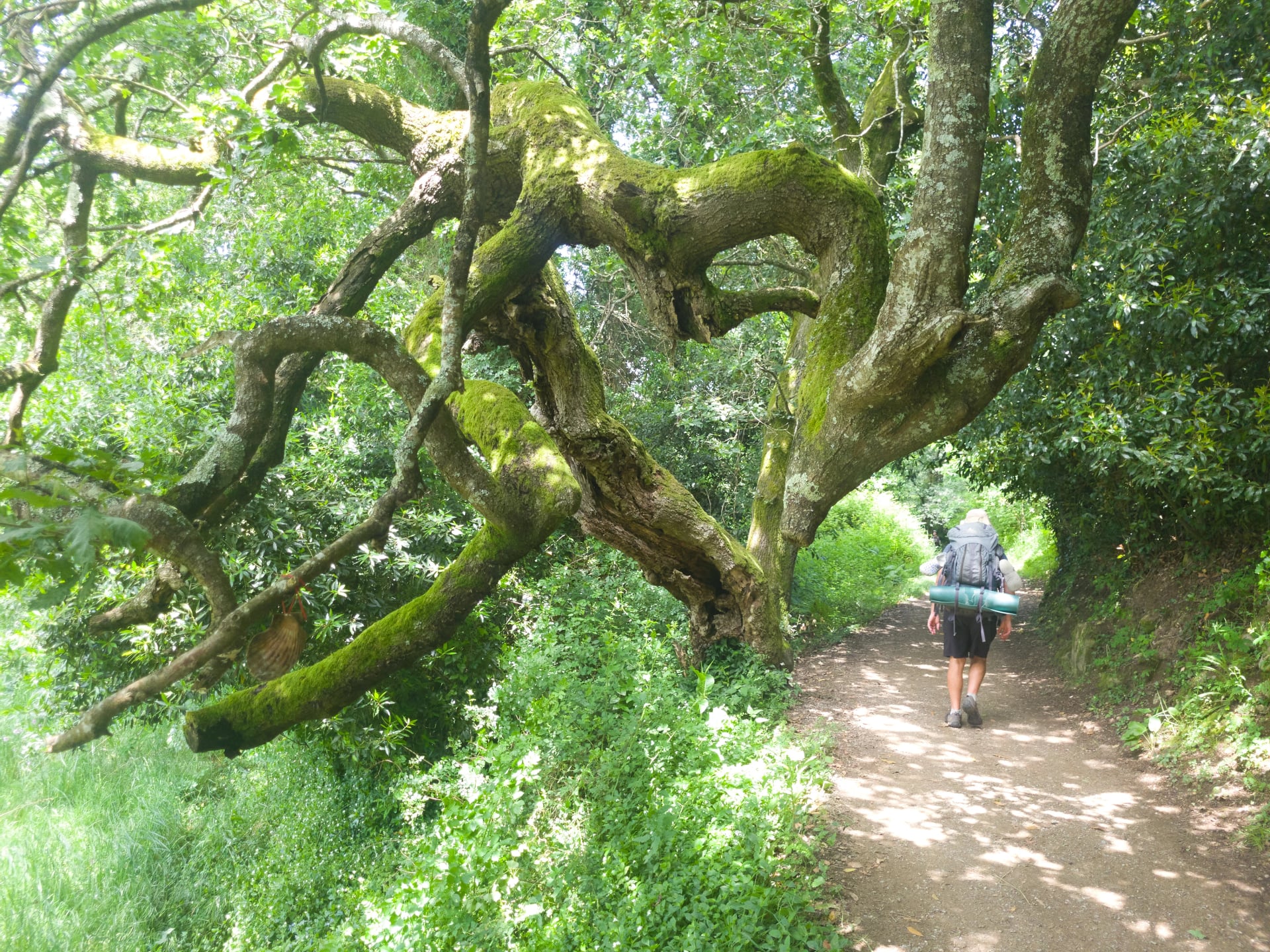
The Camino Portugués offers unique flexibility to customize your journey daily. Coastal or Central? Senda Litoral for maximum ocean time? Switch between variants at multiple connection points based on weather, energy levels, or spontaneous desire for different scenery.
This adaptability suits various pilgrimage styles—some days you crave coastal boardwalks, other days inland forests and villages. Few other Camino routes provide this freedom to shape your own path while maintaining clear waymarking and adequate infrastructure.
5. Manageable for First-Timers
Gentler terrain than Pyrenees crossings or Primitivo mountains, well-spaced stages averaging 15-25km, abundant services along the entire route, and forgiving elevation profiles make the Portugués ideal for inaugural pilgrimages. The route rarely presents technical challenges or intimidating mountain passes. Portuguese and Galician hospitality creates welcoming atmosphere for nervous first-time pilgrims. You can test your capability on the relatively easy Portuguese sections, then tackle the slightly more challenging Galician hills with confidence gained from days of successful walking.
6. Portuguese Saudade & Hospitality
Portuguese culture embraces saudade—a uniquely Portuguese concept blending nostalgia, longing, and melancholy appreciation for life's fleeting beauty. This manifests in exceptionally warm hospitality, leisurely meals savoring simple pleasures, and genuine interest in pilgrims' stories. Portuguese hosts frequently speak English better than rural Spaniards, easing communication anxieties. The combination of world-class seafood, port wine tastings, custard tarts at every café, and coastal Mediterranean atmosphere creates pilgrimage experience distinct from Spain's more austere northern routes.
Key Destinations Along the Way
The Camino Portugués passes through distinctive cities and towns, each contributing unique character to your pilgrimage. These key destinations deserve extra time—arrive early for exploration, or schedule rest days to fully experience them.
A Day on the Camino Portugués
Understanding the daily rhythm helps you prepare mentally and physically for the multi-week journey ahead. While terrain and challenges vary between Portuguese and Spanish sections, coastal and inland variants, the basic structure remains remarkably consistent.
Morning (6:30-9:00 AM)
Most pilgrims wake between 6:30-7:30 AM in Portugal—later than on Spanish routes where 5:30am stampedes are common. Portuguese cafés frustratingly open later than Spanish bars, with most not serving until 8-9am. This catches early risers off guard, especially those accustomed to Spanish Camino culture where every village bar opens by 7am. Portuguese pilgrims adapt by either carrying breakfast supplies (fruit, nuts, bread bought previous evening) or walking the first 8-10km before stopping.
Walking (8:00 AM-2:00 PM)
The core walking typically occurs during morning hours, with most pilgrims covering 18-25km per day at comfortable 4-5 km/hour pace including breaks. Coastal sections offer unique advantages: wooden boardwalks protecting fragile dunes provide flat, splinter-free surfaces where walking becomes almost effortless. These boardwalk sections stretch for kilometers along pristine beaches, offering constant ocean views and refreshing sea breezes that moderate temperatures even during summer.
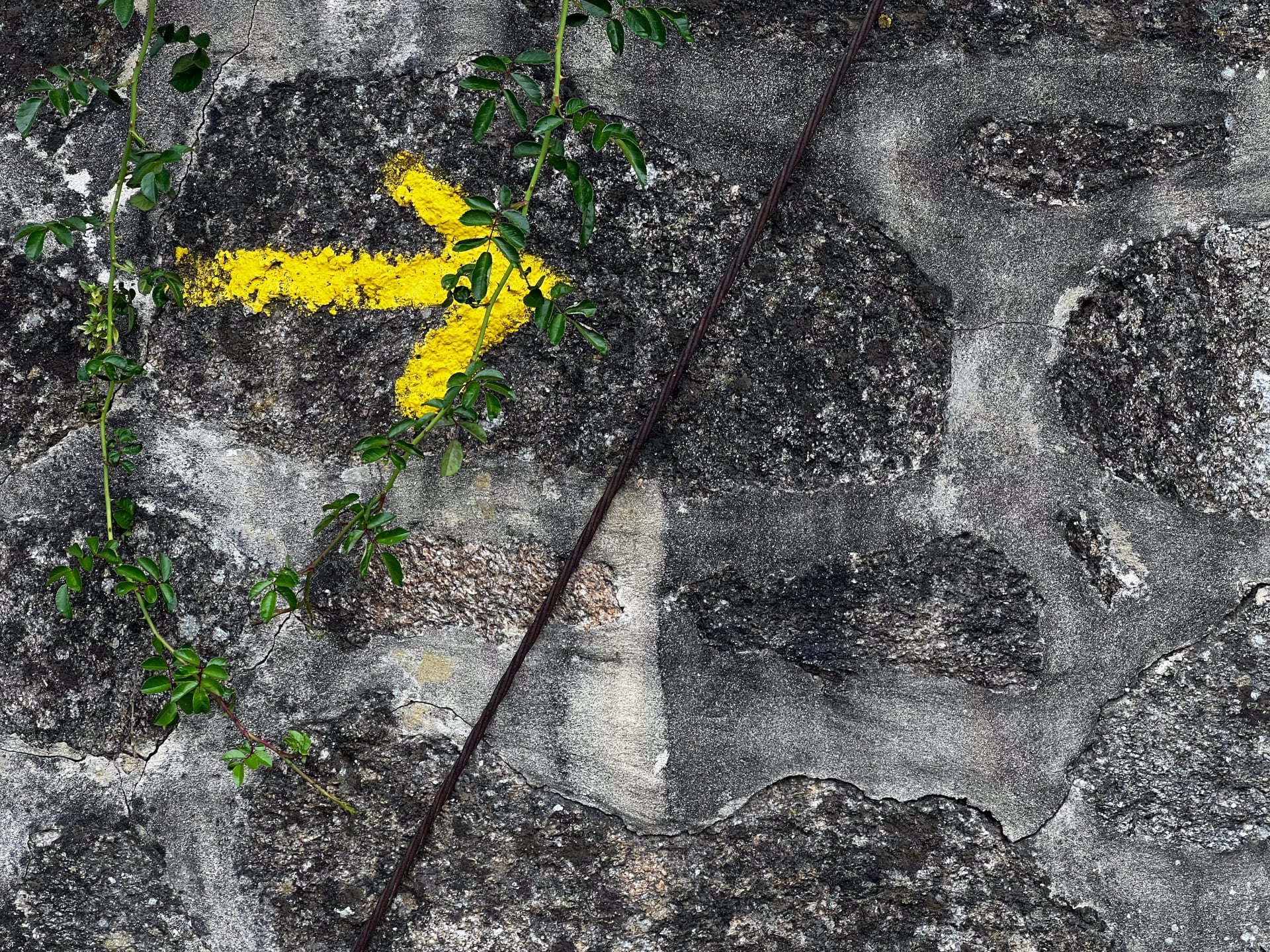
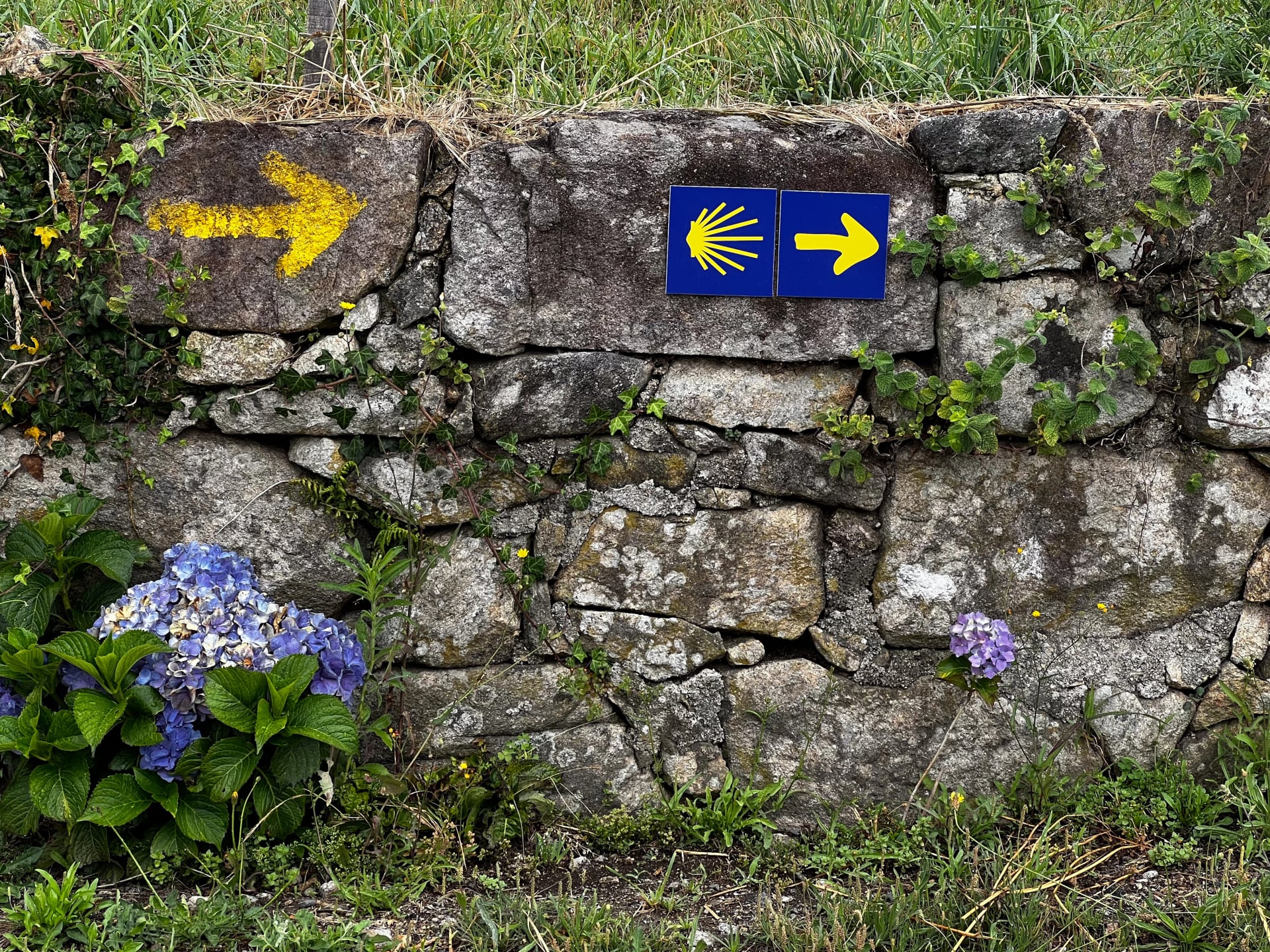
Portuguese waymarking (yellow arrows, concrete posts, scallop shell tiles) proves excellent, though less frequent than Spanish sections. In Portugal, you might walk 30-40 minutes between waymarking; in Spain, arrows appear every few hundred meters. Portuguese signing trusts pilgrims' sense of direction—trails often follow obvious paths where excessive marking seems unnecessary.
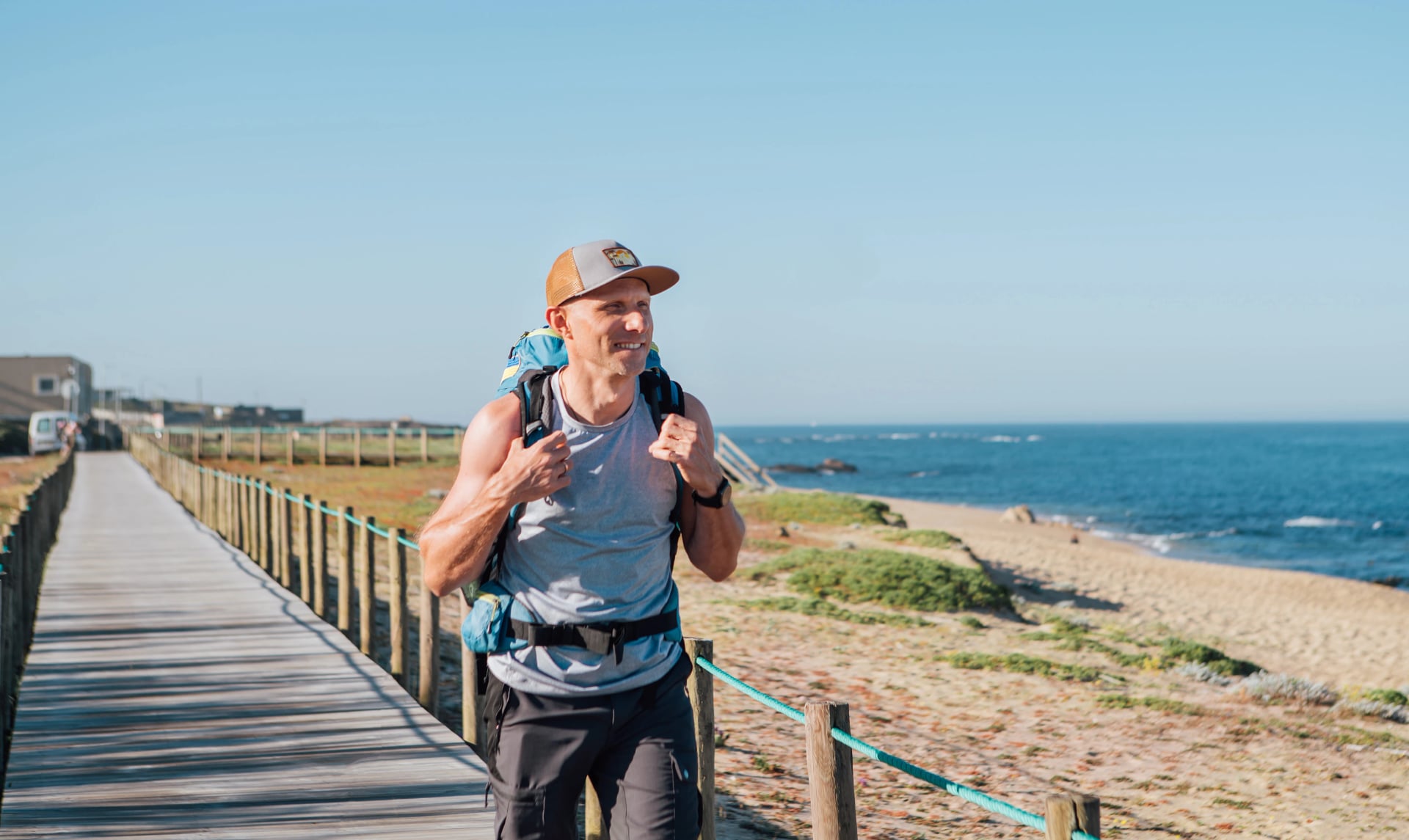
The rhythm of coastal walking creates meditative space. Ocean sounds provide constant white noise backdrop. Horizons stretch infinitely. The repetitive motion of walking combined with expansive seascapes produces contemplative states many pilgrims seek but struggle to achieve on busier inland routes. Conversations develop naturally as walking speeds align, but equally common are long stretches of solitary walking where only ocean and footsteps fill consciousness.
Afternoon Arrival (1:00-3:00 PM)
Portuguese arrival differs noticeably from Spanish albergue culture. Family-run pensions and small private albergues dominate Portuguese accommodation, creating warmer, more personal welcome than busy Spanish municipal pilgrim factories.
Portuguese hosts often speak English (far better than rural Spaniards), provide local recommendations, prepare communal dinners, and genuinely engage with pilgrims as guests rather than processing them as customers. After checking in, showering, and doing hand laundry (universal pilgrim routine), afternoons become social time—exploring towns, visiting churches, resting in garden hammocks that many Portuguese albergues provide, and gathering with fellow pilgrims. Portuguese hosts frequently join evening gatherings, sharing local history and engaging in genuine cultural exchange.
Evening (7:30-10:00 PM)
Portuguese dinners start later than Northern European expectations but earlier than Spanish norms (8:30-9:30pm versus Spain's 10pm standard). The Menu de Peregrino (Pilgrim Menu) costs €10-12 and always includes wine—typically a full bottle per person. Portuguese portions run smaller than Spanish, but multi-course structure ensures adequate calories.
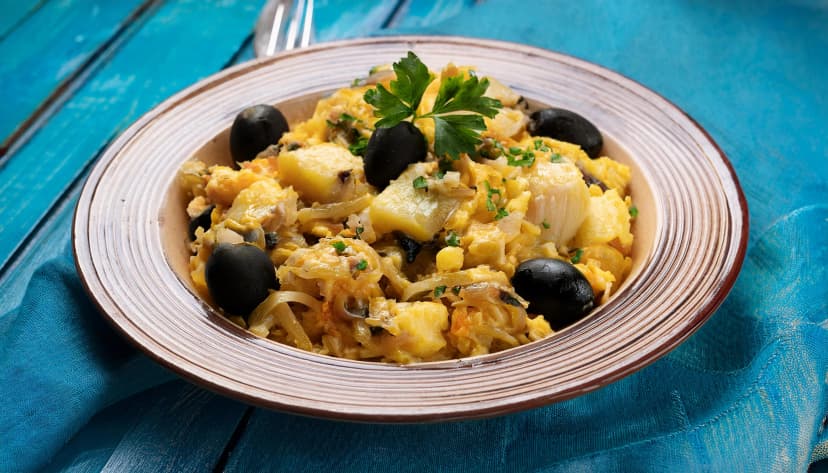
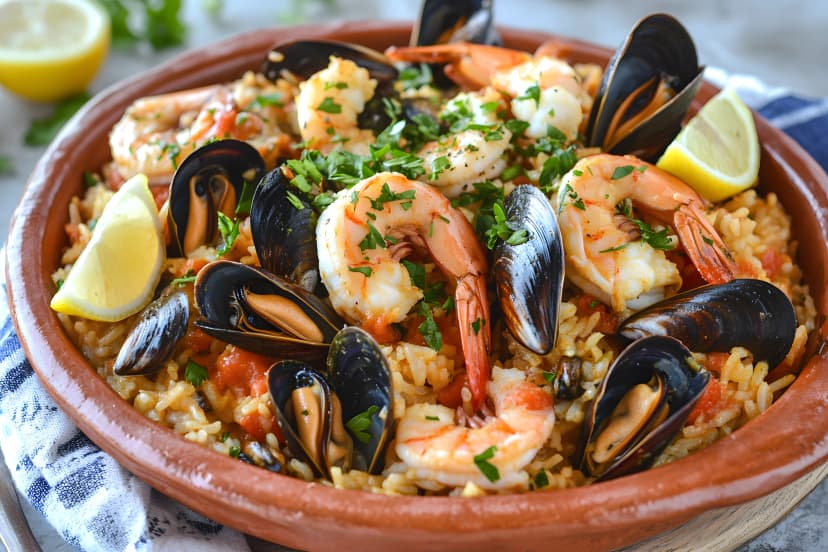
Seafood dominates coastal sections—grilled fish, seafood rice, salt cod preparations appear on every menu. Portuguese cuisine emphasizes simplicity, allowing quality ingredients to shine without excessive saucing or spicing. Olive oil, garlic, sea salt, and fresh herbs provide flavoring rather than complex preparations. The communal aspect of Portuguese pilgrim dinners creates intimate atmosphere. Portuguese hosts often eat with pilgrims, sharing the long table and treating guests like extended family. These evenings foster deep connections—sharing food, wine, stories, and laughter around a single table with 8-12 pilgrims from various countries creates Camino's most memorable social moments.
Quiet hours begin at 10-10:30pm in Portuguese albergues—slightly later than Spain's strict 10pm lights-out. Portuguese maintain more relaxed attitude toward noise and timing, though respect for sleeping neighbors remains paramount.
Food on the Way: Portuguese Culinary Treasures
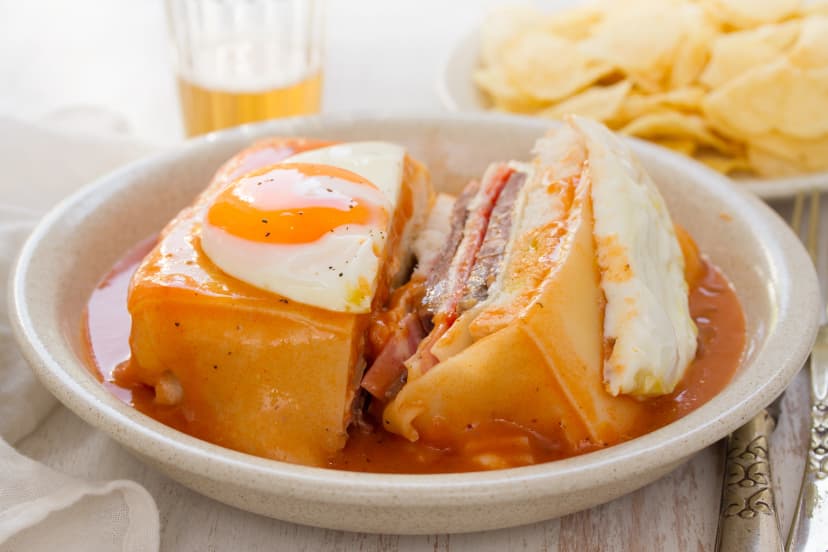
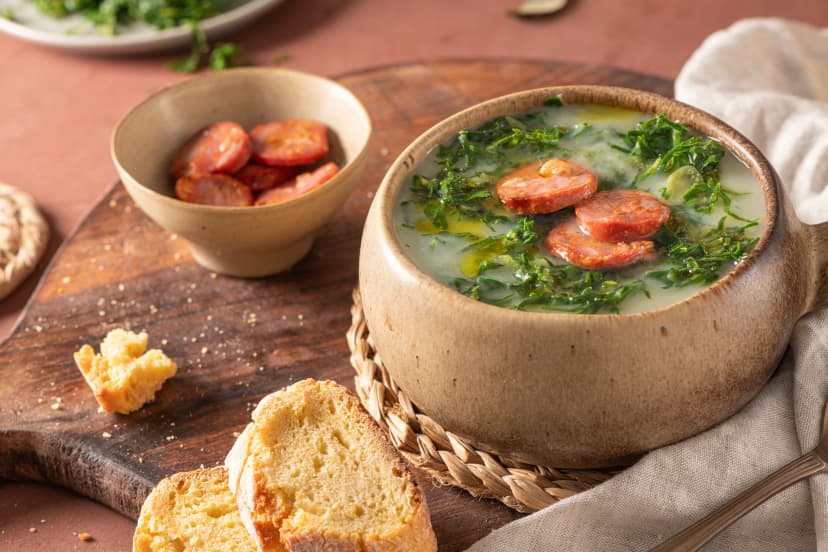
The Camino Portugués passes through two countries with distinct culinary traditions. Portuguese cuisine, shaped by maritime empire, emphasizes seafood, egg-based desserts from convent traditions, and simple preparations highlighting quality ingredients. These dishes define the Portuguese Camino experience:
Coastal vs Central vs Litoral: Choosing Your Route
The Camino Portugués's unique characteristic is flexibility. Unlike most Camino routes with single defined paths, the Portuguese Way offers three distinct variants from Porto to Redondela (190km), each creating different pilgrimage experiences. Understanding the differences helps you choose—or mix—routes matching your preferences.
1. The Central Route (Traditional Path)
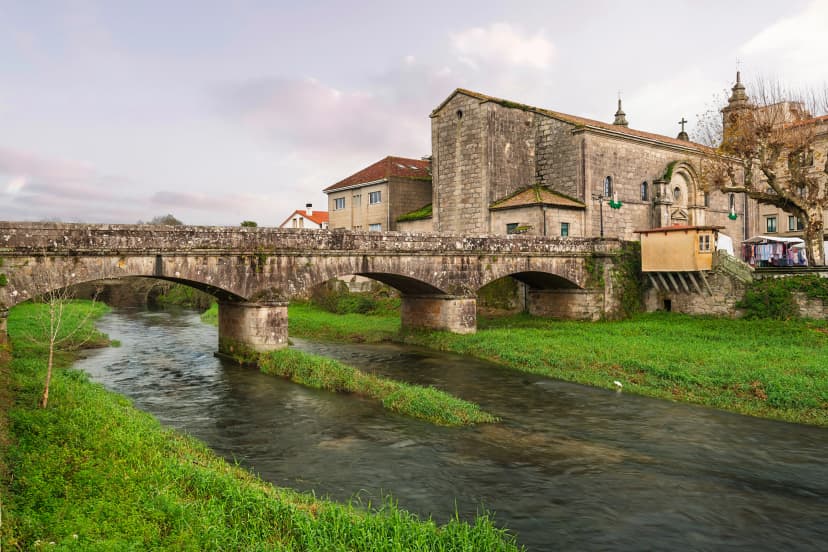
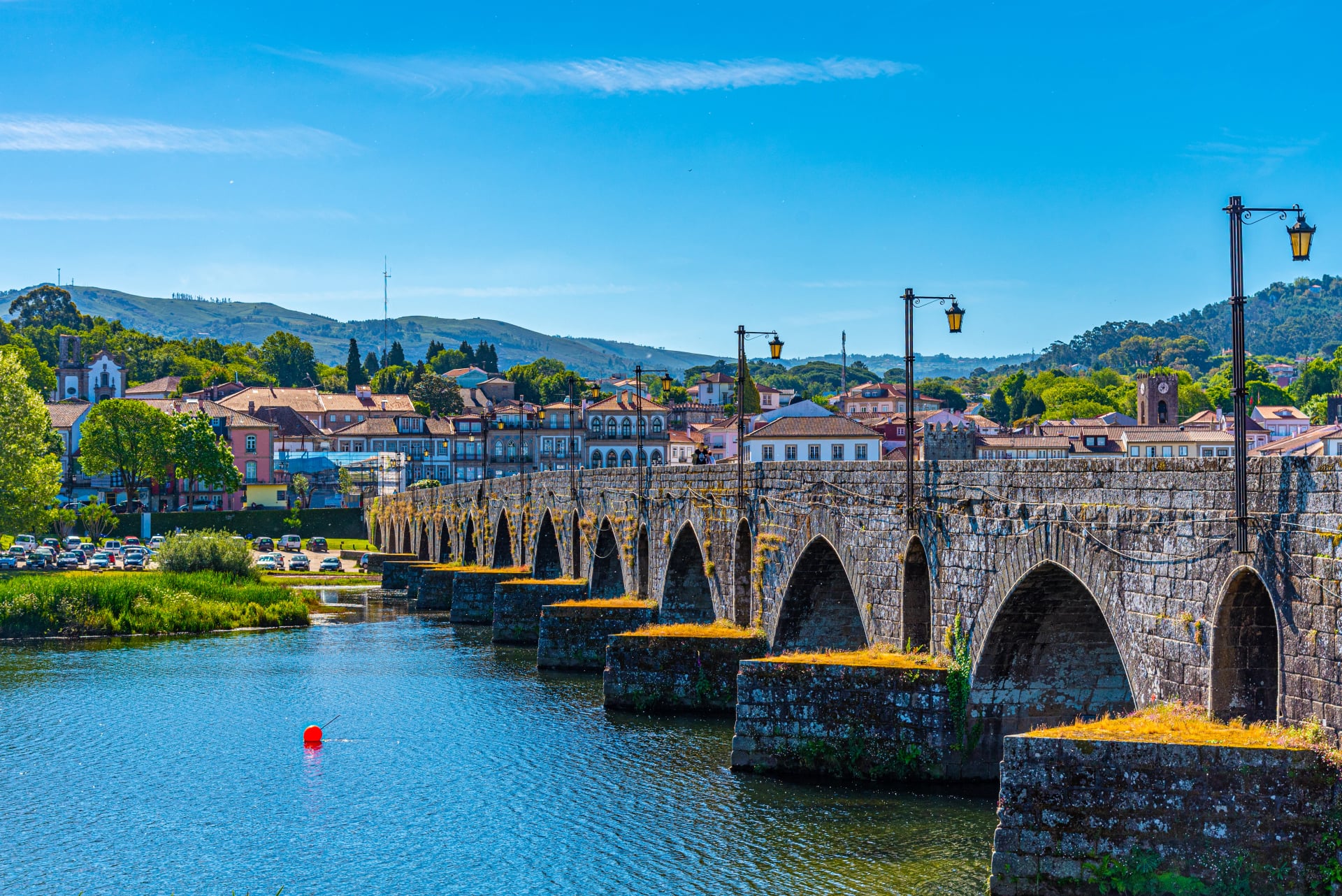
The historic inland path following Roman roads and medieval pilgrimage tradition through Portugal's heartland. From Porto, the Central Route heads north through Barcelos (famous for the legendary rooster symbol now representing Portugal), Ponte de Lima (riverside Roman town with spectacular 14-arch medieval bridge), and Valença (fortress town on Spanish border). This path prioritizes cultural and historical sites over natural beauty—you'll walk through vineyard landscapes, traditional Portuguese villages maintaining centuries-old customs, and towns where tourism remains secondary to local life.
Advantages:
More towns and services—cafés, restaurants, shops appear more frequently
Better albergue infrastructure—more options, easier walk-in availability
Slightly shorter (240km Porto to Santiago vs 280km coastal)
More pilgrims—greater social interaction, easier forming "Camino families"
Historical continuity—following the actual medieval pilgrimage path
Disadvantages:
Less dramatic scenery—rural but not spectacular
More road walking—portions follow highways or busy roads
Crowded in summer—the "traditional" route attracts higher percentage of pilgrims
Best for:
Those prioritizing culture, history, social interaction, and maximum infrastructure; those wanting shorter distance; pilgrims uncomfortable with relative isolation of coastal sections.
2. The Coastal Route (Official Ocean Path)
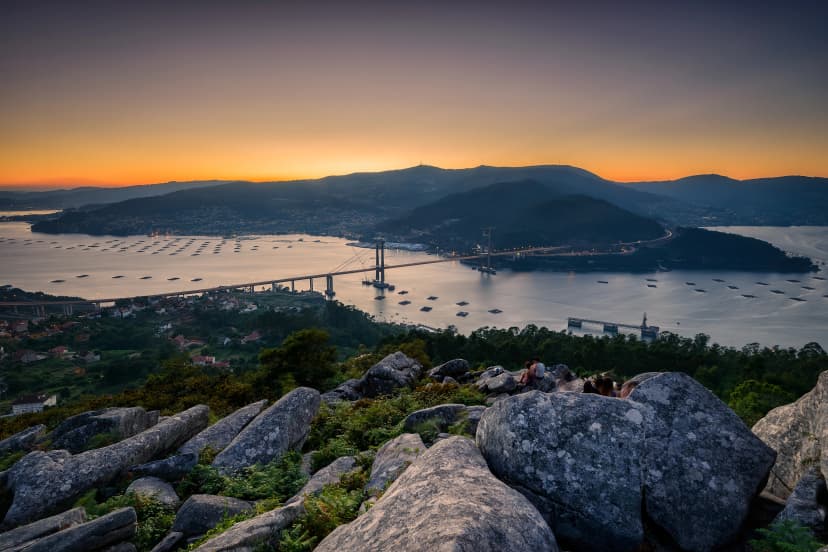
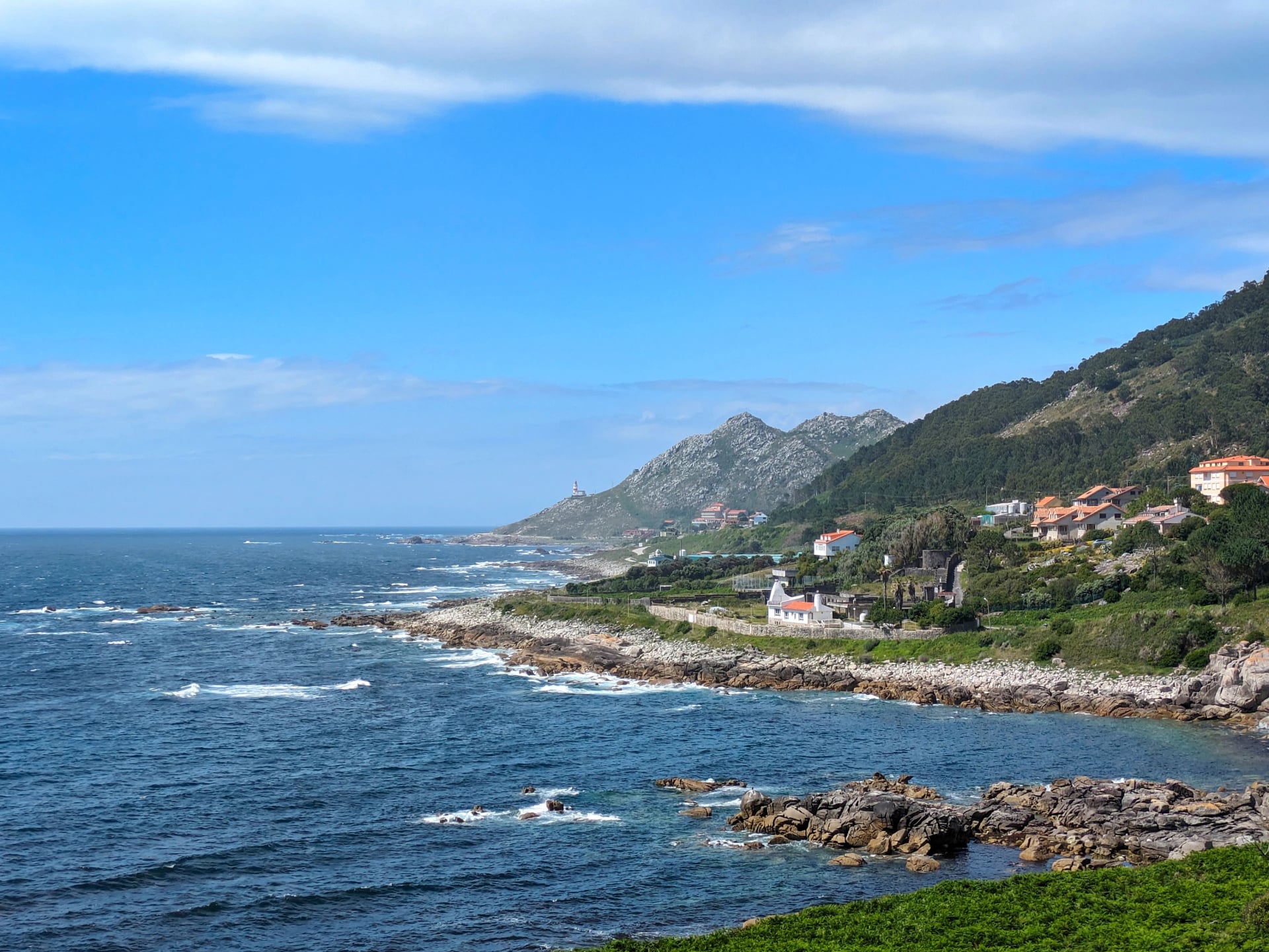
The officially marked coastal variant following Atlantic shoreline from Porto to Vigo. After exiting Porto, the route reaches the ocean at Matosinhos and follows the coast (with inland detours) through Vila do Conde, Póvoa de Varzim, Viana do Castelo, Caminha (Portugal), then A Guarda, Baiona, and Vigo (Spain). Ocean views comprise approximately 40% of total distance—more than any other Camino route, but less than the name suggests. The route alternates between coastal boardwalks and inland sections cutting across peninsulas.
Advantages:
Consistent ocean views and beaches—more spectacular than inland countryside
Wooden boardwalks—kilometers of flat, easy walking on constructed paths
Unique ferry crossing—boat across Minho River creates memorable transition
Refreshing sea breezes—moderate summer temperatures
Fewer pilgrims—more intimate than Central Route
Beach swimming opportunities—cool off during hot afternoons
Disadvantages:
Longer distance (280km vs 240km central)
Less infrastructure in places—some coastal sections require longer distances between services
Wind exposure—Atlantic breezes become headwinds on bad weather days
More expensive sometimes—coastal towns charge higher accommodation prices
Best for:
Those prioritizing natural beauty over culture; those comfortable with slightly more isolation; pilgrims who love ocean environments; those with 12-14 days available rather than strict 10-day limit.
3. The Senda Litoral (Maximum Coastal)
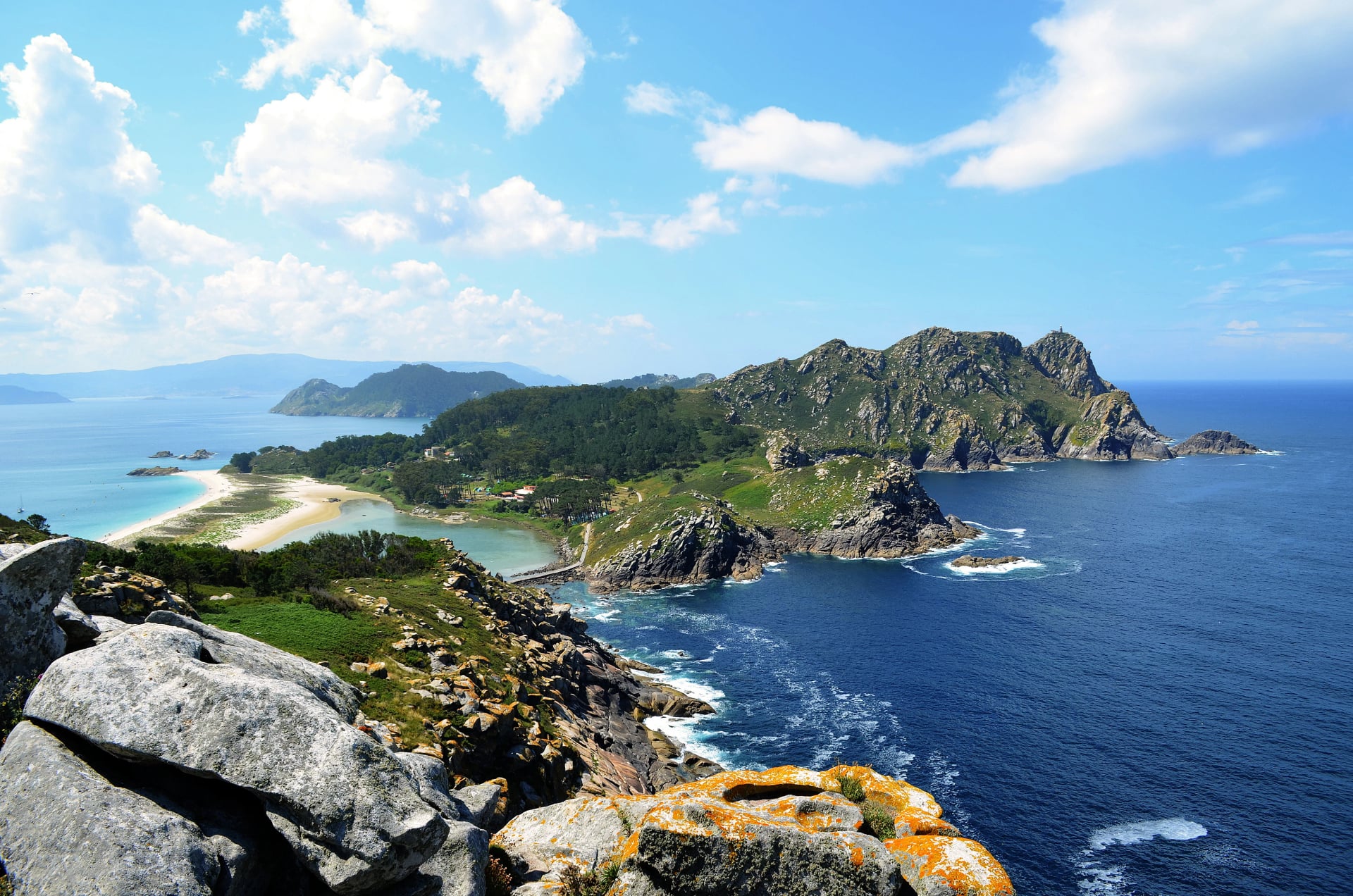
An unofficial variant staying closest to the ocean wherever possible, diverging from the official Coastal Route to follow beaches, boardwalks, and clifftop paths. The Senda Litoral ("Coastal Path") delivers what many pilgrims expect from "Coastal Camino" but don't always find—approximately 80% actual coastline. When the official Coastal Route cuts inland, the Litoral stays seaside.
Advantages:
Maximum ocean exposure—true beach walking
Most dramatic Atlantic views—clifftops, pristine beaches, fishing villages
Fewer infrastructure compromises—stays coastal despite difficulty
Wildness and solitude—even less crowded than official coastal
Disadvantages:
Less infrastructure—fewer services, longer distances between facilities
More challenging waymarking—not always clearly marked
Weather dependent—high tides or storms can block beach sections
Requires more experience—not ideal for first Camino
Best for:
Experienced pilgrims specifically seeking maximum coastal exposure; those comfortable with occasional navigation challenges; those prioritizing natural beauty above all else; those willing to accept infrastructure trade-offs for scenery.
Deciding On a Path
Most pilgrims don't choose one variant exclusively. The beauty of the Camino Portugués lies in switching freely between variants. Key connection points:
Vila do Conde (30km from Porto): First split. Official Coastal continues north; connection route heads east to Central Route at Rates. Many pilgrims walk coastal Porto → Vila do Conde, then switch to Central to visit Barcelos and Ponte de Lima.
Caminha (107km from Porto): Second connection. From Caminha, you can cross to Spain via ferry (staying coastal) or follow the Minho River inland to Valença (switching to Central). This allows walking Portuguese coastal sections, then switching to Spanish Central for variety.
Our Recommendation: Start on the Coastal Route from Porto. The ocean views, boardwalks, and beach atmosphere showcase what makes this Camino special. If weather turns bad or you tire of wind exposure, switch to Central at Vila do Conde or Caminha. From Redondela onward (where routes merge), all pilgrims follow the same path for the final 90km to Santiago. This strategy provides coastal highlights while maintaining flexibility based on conditions and preferences.
Historical Overview
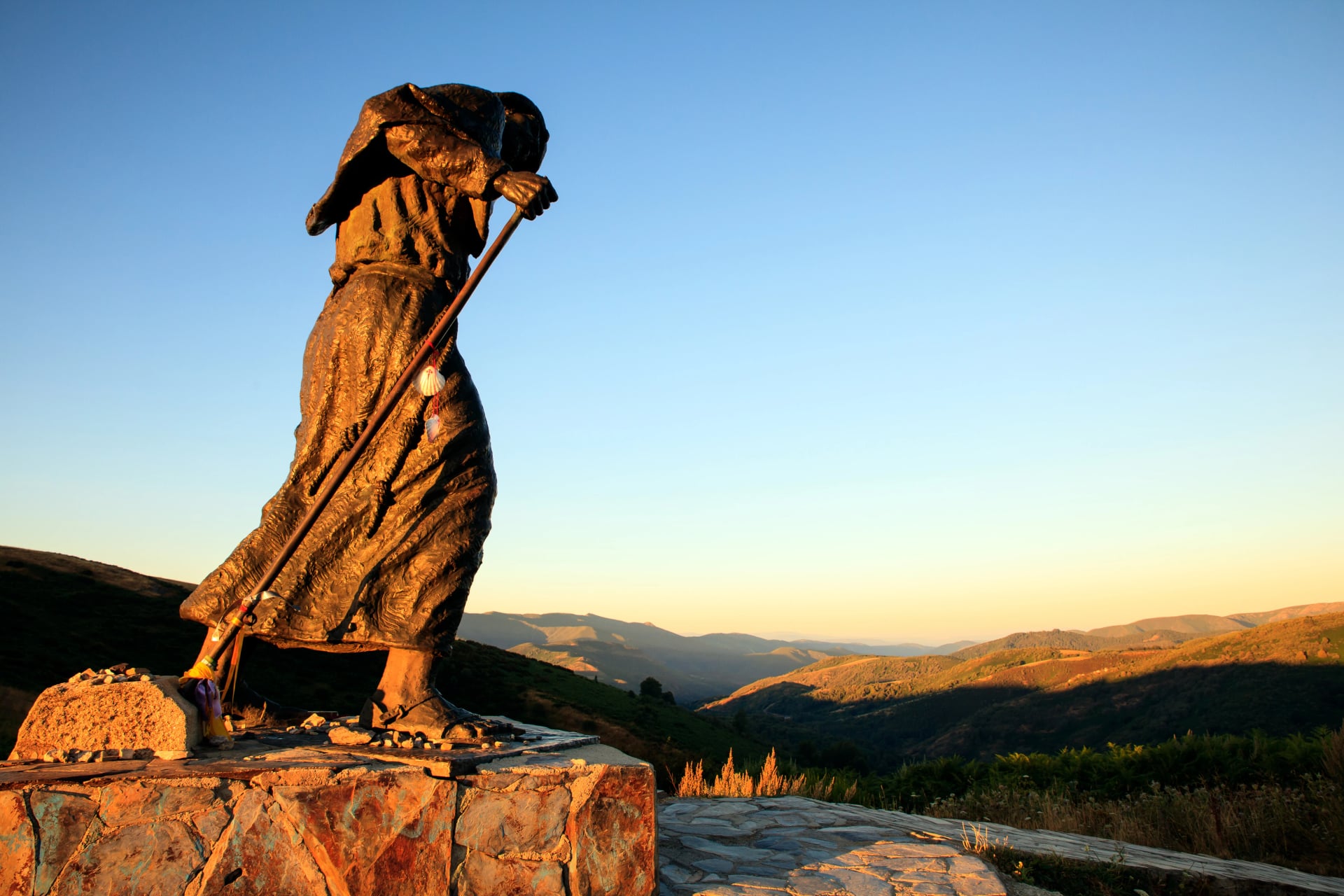
The Portuguese Way grew in importance in the mid-12th century, following Portugal’s independence, as Portuguese pilgrims consolidated their own routes to Santiago. A key medieval anchor is the Monastery of Rates, rebuilt in 1100. Its Romanesque church became an important waypoint, strengthened by the local tradition of Saint Peter of Rates.
Older infrastructure sits underneath the pilgrimage story. Sections align with Roman-era roads, including the Via XIX (an Augustan-period route recorded in the Antonine Itinerary) linking places such as Braga and Astorga via Galicia. Royal example also mattered. Queen Isabel of Portugal (Isabel of Aragon) is recorded as traveling on pilgrimage to Santiago in 1325, reinforcing the route’s prestige beyond purely local devotion.
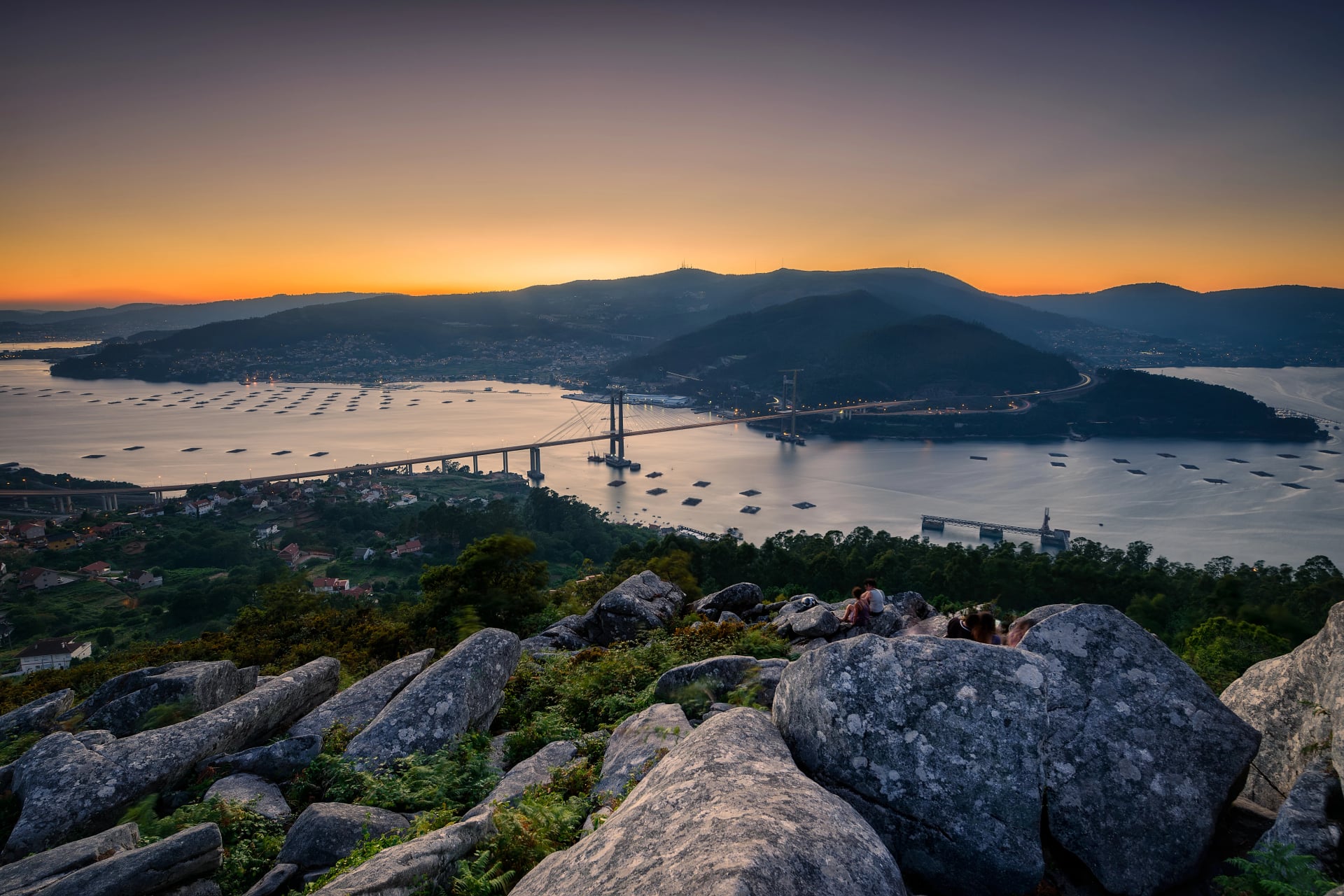
The Coastal Way (Caminho da Costa) later gained prominence as Atlantic towns expanded—ultimately shaping a variant that leans into the shoreline and maritime settlements rather than inland corridors.
Terrain & Difficulty
The Camino Portugués takes pilgrims through diverse terrains, each offering its own level of challenge—though overall, this route ranks among the Camino's easiest, making it ideal for first-time long-distance walkers or those seeking gentler pilgrimage.
Portuguese Sections (Porto to Border)
In urban areas like Lisbon and Porto, the path begins on paved streets and cobblestones. Porto's exit involves navigating city streets and industrial suburbs for the first 8-10 kilometers—not scenic, but well-marked and easy walking. Once clear of urban sprawl, the terrain opens into countryside.
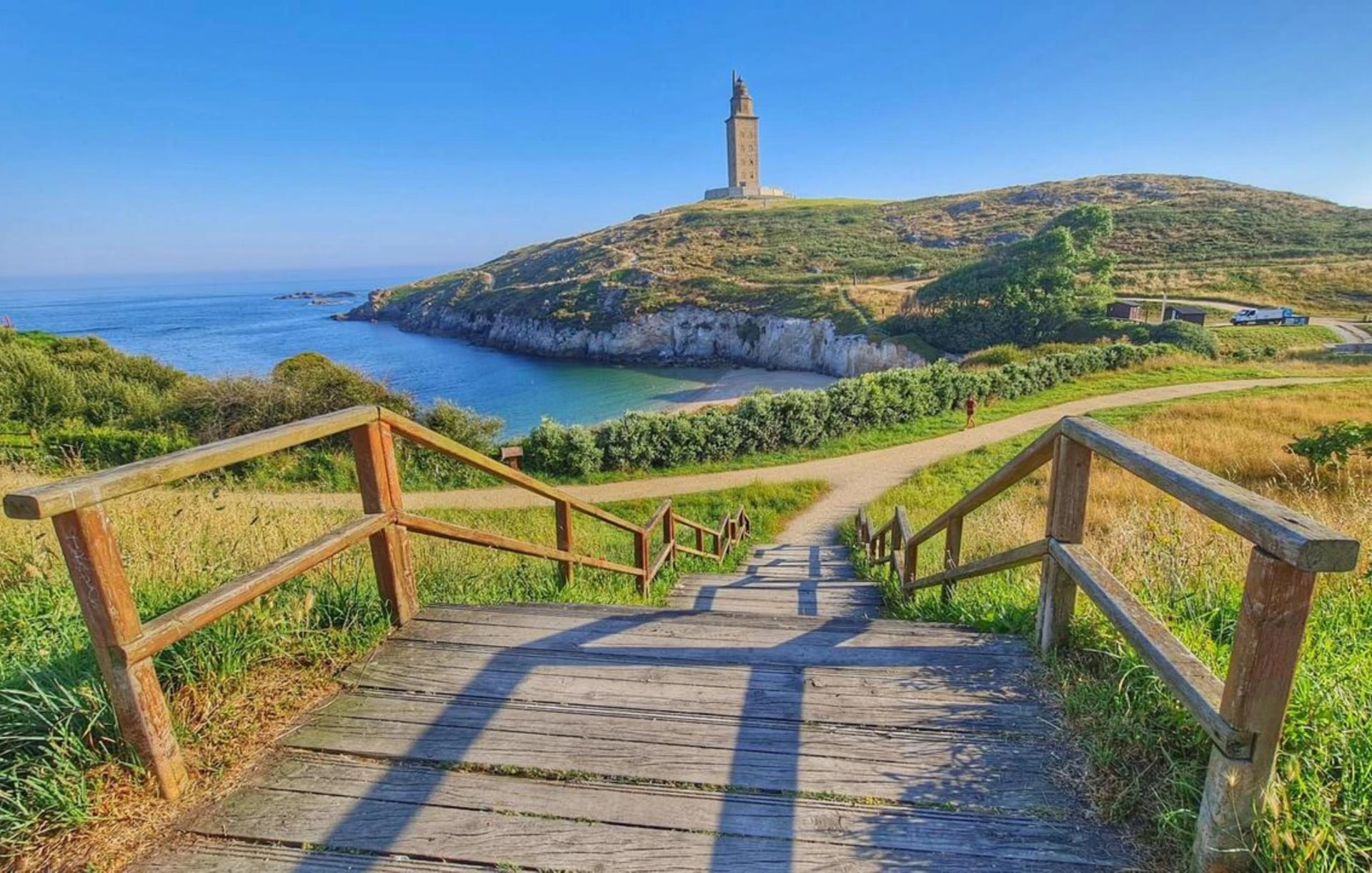
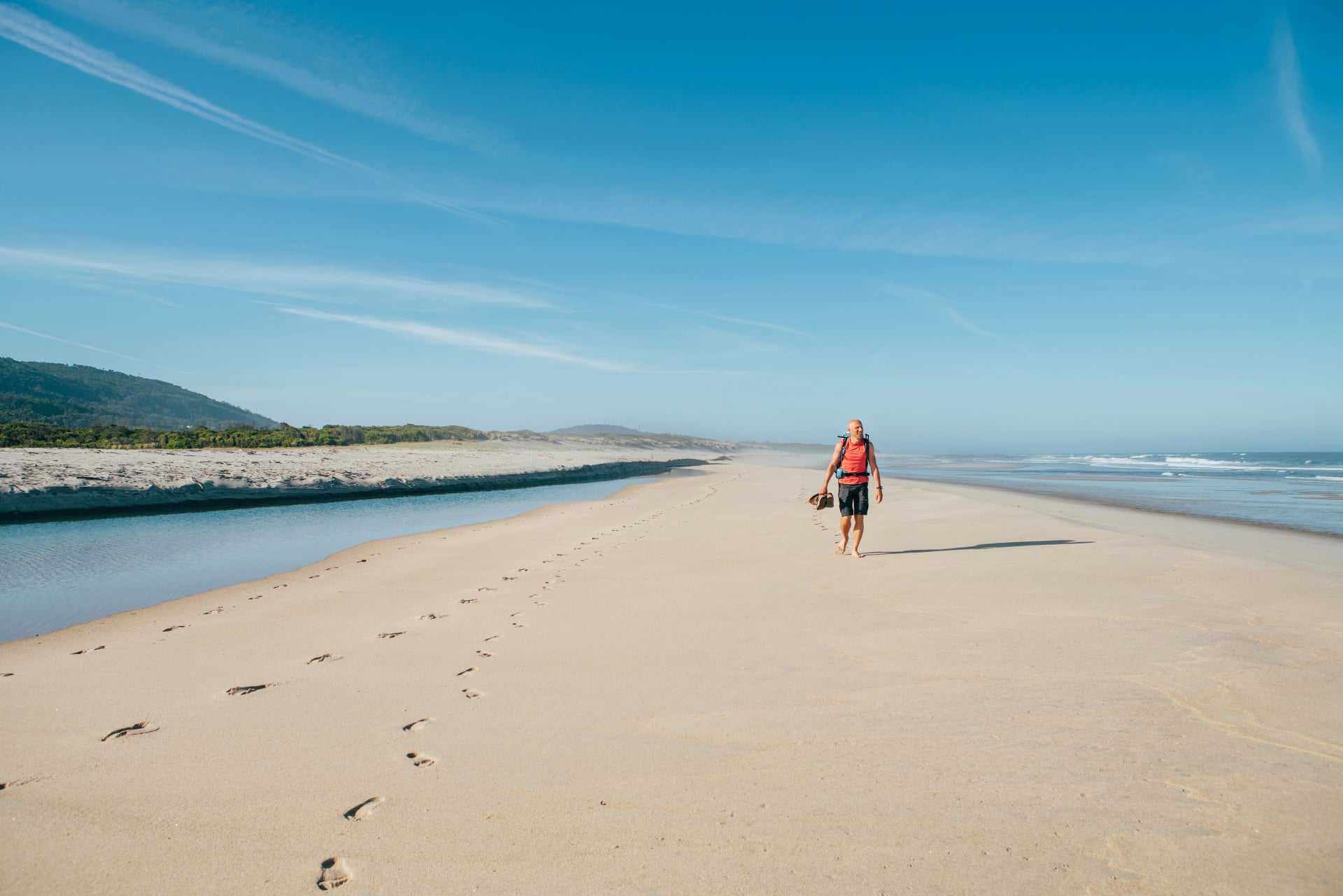
The Coastal Route features extensive wooden boardwalks protecting fragile dune ecosystems while providing pilgrims with perfectly flat, easy walking surfaces. These boardwalk sections stretch for kilometers along pristine beaches, offering arguably the easiest terrain of any major Camino route. Beach sand sections occasionally require walking, but most coastal walking occurs on constructed paths rather than challenging beach sand.
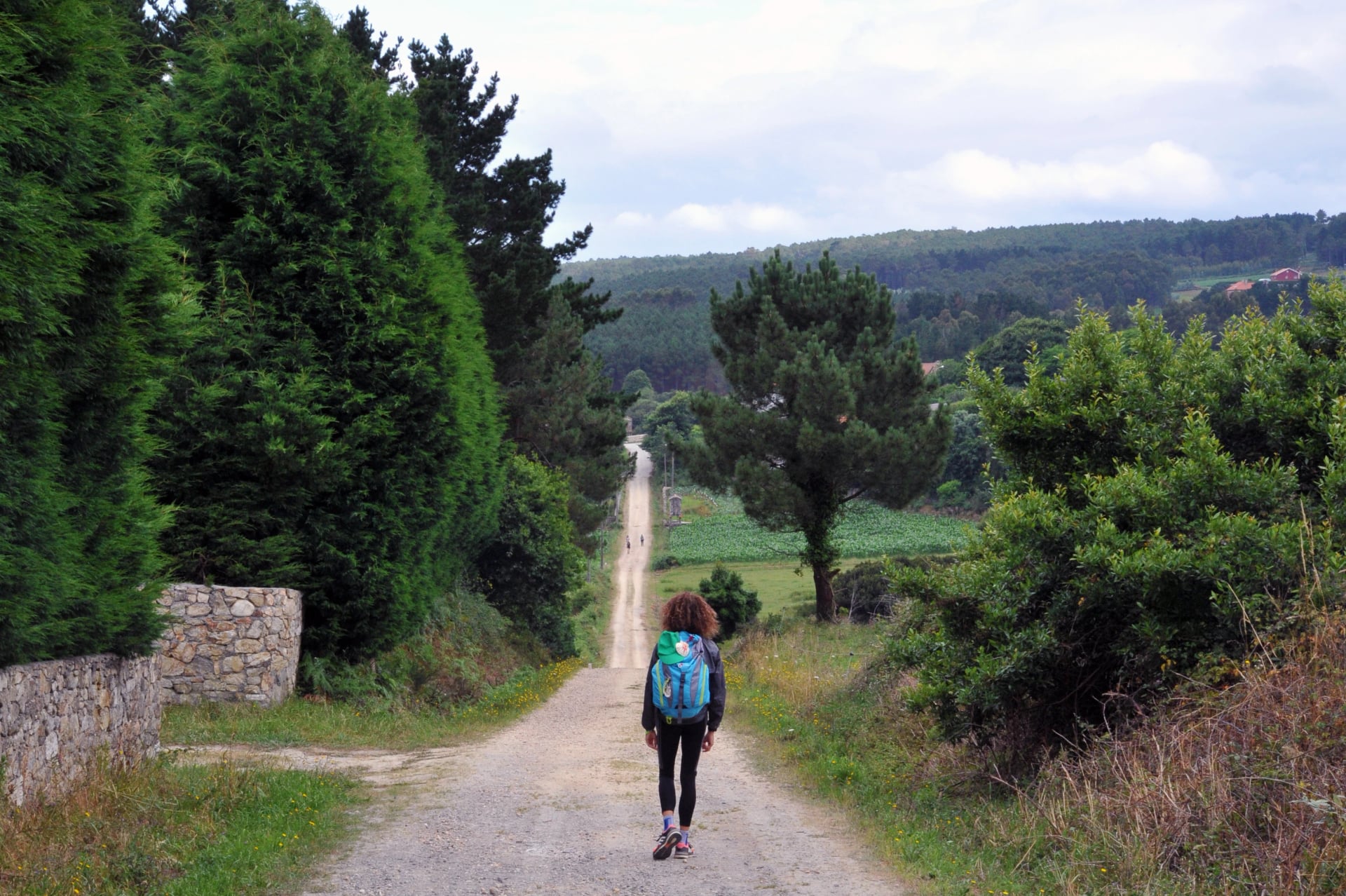
The Central Route transitions into rural landscapes characterized by open fields, vineyards, and forests. Rolling hills provide gentle ups and downs, but nothing approaching mountains or serious elevation gain. The path mixes dirt tracks, gravel paths, and quiet country roads—variety that keeps daily walking interesting without presenting technical challenges.
Spanish Sections (Border to Santiago)
Crossing into Galicia, terrain becomes more varied with rolling hills and forested paths. Galicia's famous green landscapes result from frequent rain—expect some muddy trail sections, particularly after wet weather. The ascent after A Guarda presents the coastal route's first significant hill—Monte Santa Tecla at 341 meters elevation. This climb, while notable after flat Portuguese coastal sections, remains moderate by Camino standards.
The final 90km from Redondela to Santiago follows gentle Galician hills—up and down, up and down, in repetitive rhythm that builds leg strength without overwhelming stamina. Eucalyptus forests provide shade, small streams require simple stone crossings, and villages appear every 3-5km with services.
Overall, the Camino Portugués is suitable for most pilgrims, from experienced trekkers to those undertaking their first long-distance walk. While weather conditions can impact difficulty, adequate preparation and the right gear ensure comfortable experience.
When to Go? Seasonal Considerations
The Camino Portugués is walkable year-round due to coastal location and southern latitude, though seasons create vastly different experiences. Understanding patterns helps align your journey with personal preferences.
Best Months
Late May through June and September through mid-October offer optimal conditions—comfortable temperatures (15-25°C), stable weather patterns, manageable crowds, and all services operational. These shoulder-season months provide the best balance for most pilgrims. Spring brings wildflower displays transforming Portuguese countryside into colorful carpets, while autumn delivers harvest season abundance and gentler light creating golden-hour photographic conditions.
Monthly Breakdown
July-August
represents the busiest and warmest period. Coastal location moderates temperatures compared to inland routes—the Atlantic Ocean rarely allows temperatures above 30°C even during peak summer, while Meseta sections of the Francés routinely hit 40°C+. Sea breezes provide natural air conditioning, making summer coastal walking more comfortable than other July/August Camino options.
However, accommodation must be booked weeks in advance, especially for Sarria-to-Santiago section where Portuguese and French routes converge. Prices increase 20-30% during peak season. The social atmosphere reaches maximum intensity—if you're seeking vibrant international community, summer delivers. If you prefer solitude, avoid July-August entirely.
April through early May
brings unpredictable weather with possible rain, but fewer crowds and beautiful conditions when weather cooperates. Portuguese spring features comfortable temperatures (13-20°C), green landscapes from winter rains, and wildflowers blooming across countryside and coastal paths. Accommodation prices remain reasonable, booking same-day or day-ahead usually succeeds. Spring suits pilgrims with flexible schedules who can adjust daily plans based on weather.
September through October
many consider the absolute best time for Portuguese Camino. Temperatures remain warm (18-24°C) without summer's intensity, the ocean stays swimmable, and autumn light creates photographers' dream conditions. September sees lingering summer crowds but October quiets significantly. Harvest season brings fresh produce abundance—markets overflow with grapes, figs, and seasonal specialties.
Potential drawback: some albergues begin closing after mid-October, particularly smaller donativo and volunteer-run establishments preparing for winter. However, the Portuguese routes maintain better off-season infrastructure than mountain routes.
November through March
presents the Camino's quietest, wettest period. Coastal Galicia sees frequent rain—expect wet days, muddy trails, and gray Atlantic skies. However, temperatures rarely drop below 5°C at sea level, making winter walking feasible unlike Pyrenees or mountain routes where snow becomes dangerous or impassable.
Many albergues close entirely or operate limited hours. Portuguese sections maintain better winter services than Spanish sections. Winter suits experienced pilgrims comfortable with solitude, limited services, and weather challenges. The compensation? Profound quietness—walking days without encountering another pilgrim, authentic local interactions impossible during tourist season, and prices 30-40% below summer rates.
The coastal location makes Portuguese routes among the few Caminos realistically walkable year-round. If forced to choose winter pilgrimage, the Portugués and Inglés (both coastal Galician routes) present best options.
Infrastructure: Services & Support Along the Way
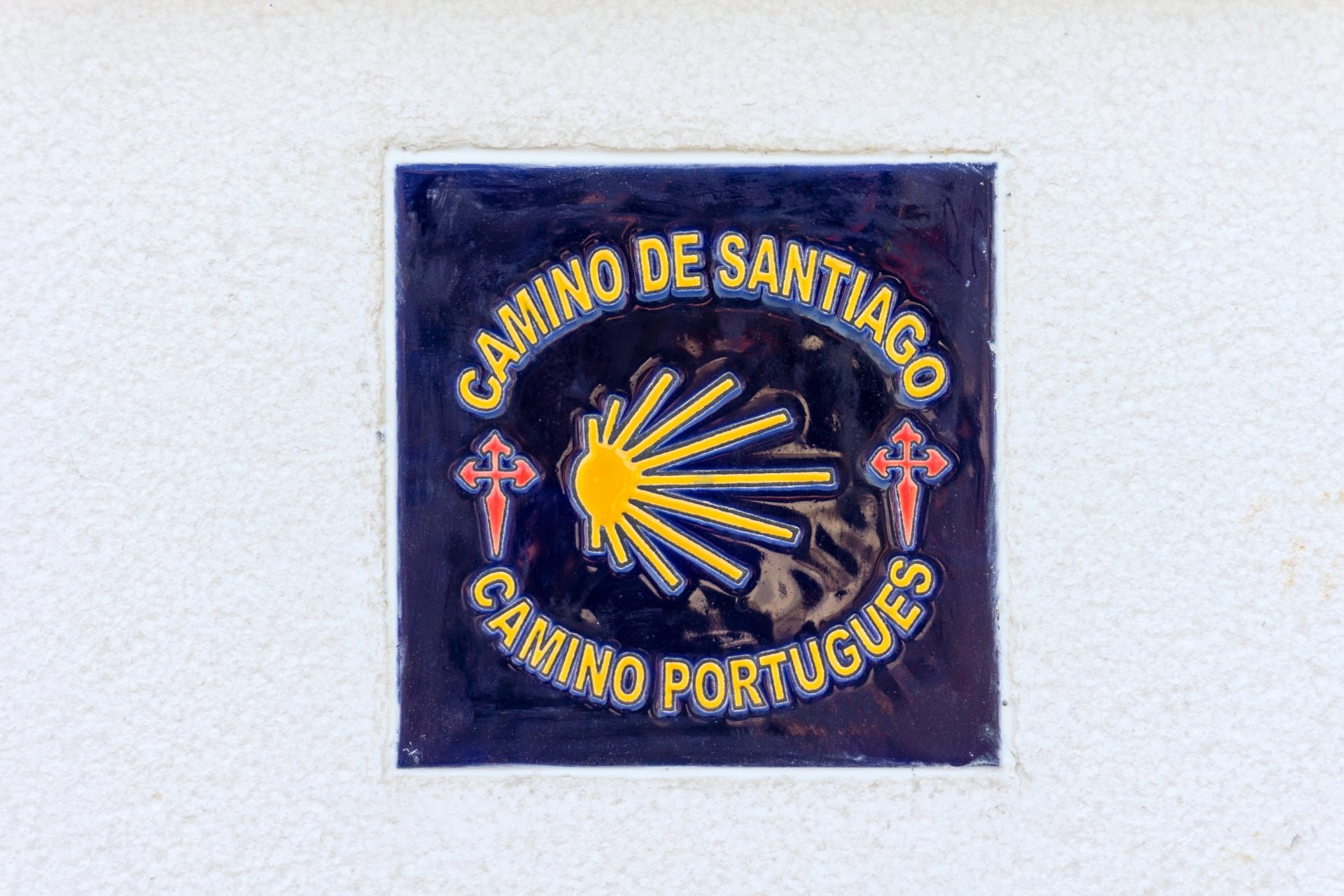
The infrastructure along the Camino Portugués, including its Coastal variant, facilitates smooth and comfortable journey for pilgrims. This infrastructure encompasses a range of amenities and services essential for daily needs and emergencies, though it varies between Portuguese and Spanish sections.
Accommodation Options
Pilgrims on the Camino Portugués have various accommodation options, ranging from traditional albergues (pilgrim hostels) to hotels and guesthouses. Albergues, often run by local municipalities, religious organizations, or private entities, provide budget-friendly basic lodging. Portuguese albergues frequently offer more personal, family-run atmosphere than Spanish equivalents, with hosts who speak English and provide genuine hospitality.
In larger towns and cities, hotels and guesthouses offer more comfort and privacy. The availability of pilgrim accommodation varies along the route. The stretch between Lisbon and Porto has fewer albergues, with alternative options like volunteer firefighter barracks, youth hostels, or parish houses requiring advance research.
From Porto to Valença do Minho, the number of albergues increases significantly, making it easier to find accommodation. The Portuguese coastal sections maintain good infrastructure despite being newer routes—development followed pilgrimage popularity rather than preceding it. From Redondela to Santiago de Compostela, infrastructure matches the Francés's density—this final 90km sees multiple accommodation options in every town.
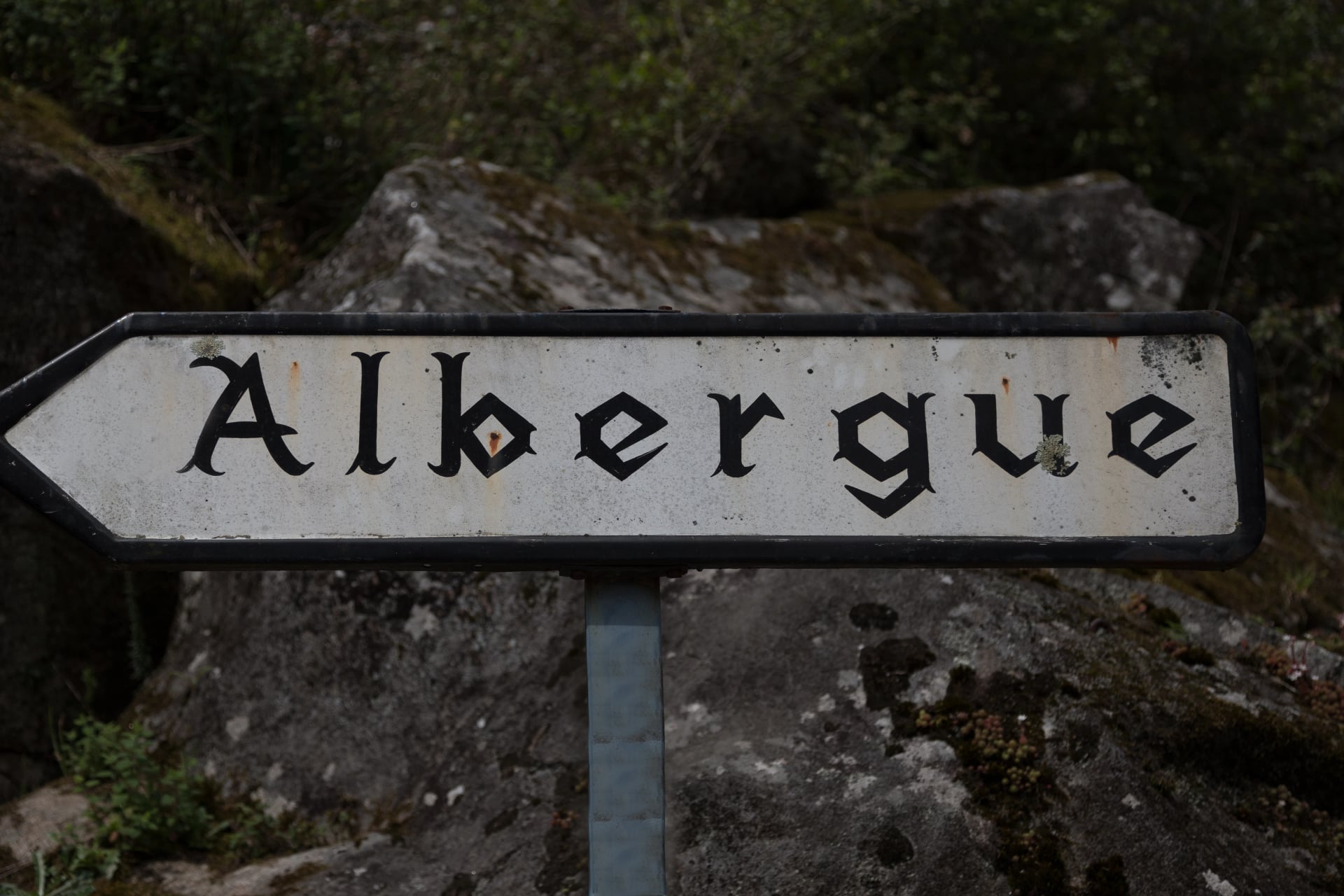
For more information about accommodation on any Camino in general make sure to see our accommodation guide.
Food & Supply Access
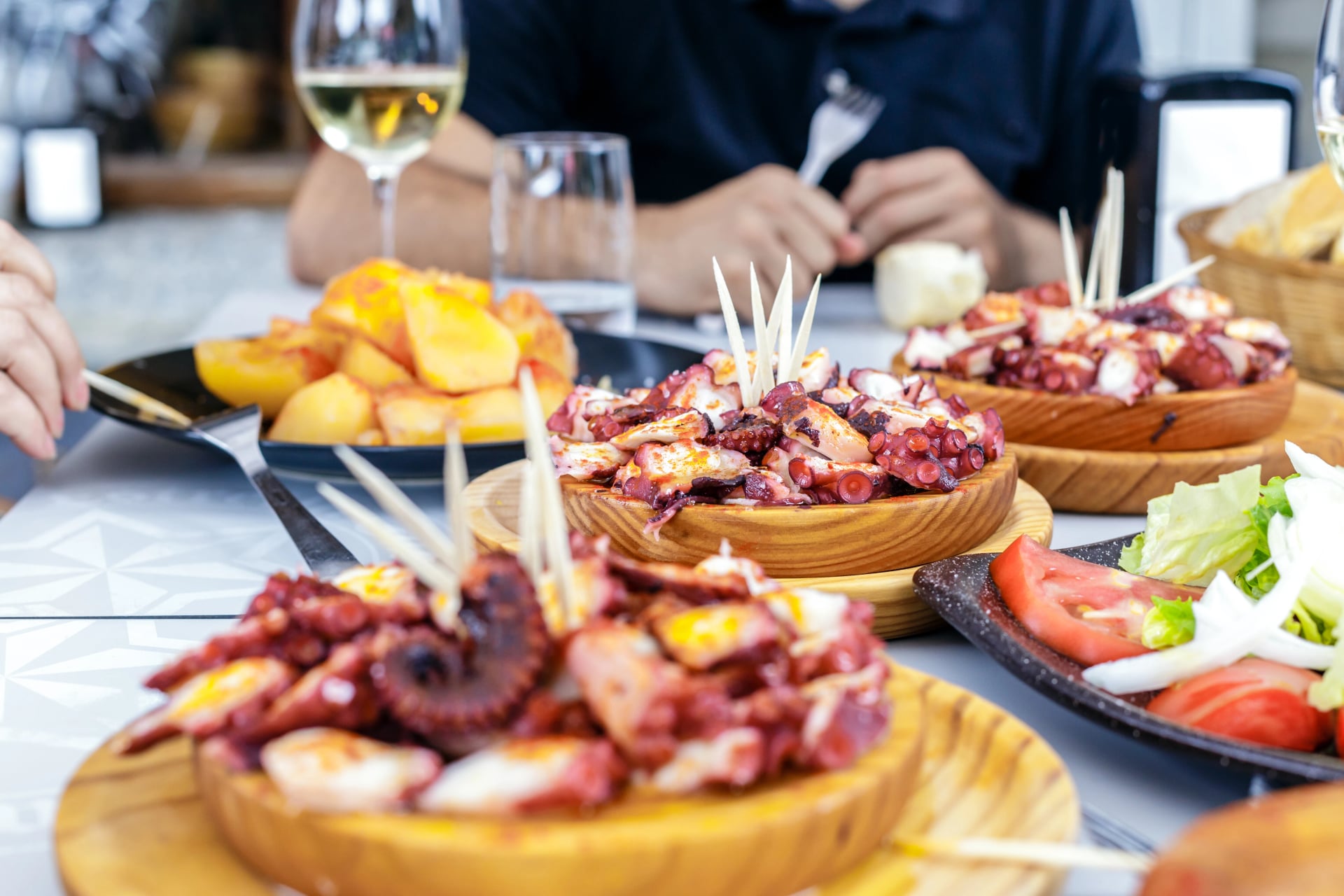
The Camino Portugués is well-served by variety of bars, restaurants, and shops, ensuring that pilgrims have regular access to food and supplies. In most sections of the route, you rarely walk more than one hour without encountering a café for coffee, pastry, or sandwich. This easy access to amenities makes the Camino Portugués especially appealing for first-time pilgrims or those who prefer not to carry excessive food or water.
Portuguese cafés and small grocery shops appear frequently in coastal towns. Beach-area establishments cater to locals and tourists, maintaining year-round operation. The Central Route passes through more agricultural villages where services concentrate around lunchtime—expect limited early morning or late evening options in smaller towns.
Spanish Galician sections provide abundant bar-restaurant options where pilgrims can order the Menu del Peregrino (€10-15 for three courses including wine). Supermarkets in larger towns (Vigo, Pontevedra, Redondela, Padrón) allow stocking up on supplies.
Check out our Camino cuisine guide!
Safety & Emergency Services
Along the Camino, healthcare facilities including pharmacies (farmacias in both countries) and clinics are available in larger towns and cities. Emergency services (112 throughout EU) are accessible throughout the route. The well-marked trails, regular accommodations, and presence of other pilgrims contribute to safe walking environment.
Portuguese hospitals and clinics provide excellent care—Portugal's healthcare system ranks highly in Europe. Travel insurance covering medical treatment recommended but not required for EU citizens. Pharmacies display green crosses and provide over-the-counter medications for common ailments: blisters, muscle pain, digestive issues.
Transportation & Logistics
The Camino Portugués is accessible via various transportation modes, including bus, train, and air travel, especially to the starting points in Lisbon and Porto. For pilgrims who prefer not to carry their backpacks, luggage transfer services are available, transporting bags from one accommodation to the next for €5-8 per day. These services operate reliably on both Portuguese and Spanish sections.
Waymarking & Navigation
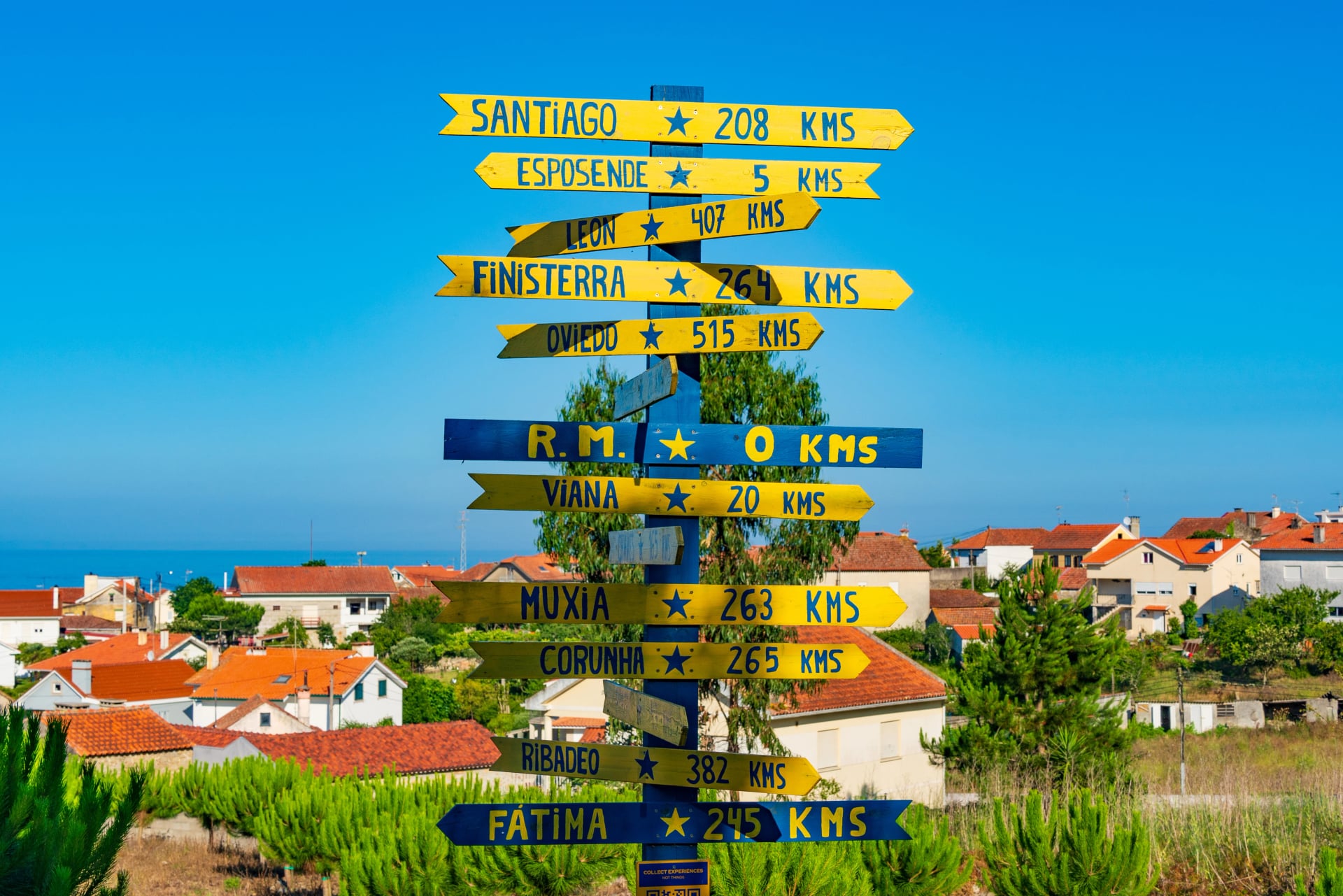
The route is exceptionally well-marked with the familiar yellow arrows, blue-and-yellow ceramic tiles (Portuguese style), and concrete posts with scallop shells. This impeccable waymarking, a joint effort by Galician and Portuguese associations, proves particularly noteworthy on the Camino Portugués. Portuguese waymarking appears less frequent than Spanish but remains adequate—arrows placed at every junction where confusion might occur.
How to Get to the Starting Point
The Camino Portugués offers two primary starting points for pilgrims: Lisbon and Porto. Both cities are well-connected and easily accessible by various modes of transportation, making the beginning of the pilgrimage journey convenient for travelers worldwide.
Lisbon: Southern Gateway
By Air: Lisbon Portela Airport (also known as Humberto Delgado Airport) is Portugal's main international gateway. It hosts numerous flights from major European cities and intercontinental connections through TAP Air Portugal, Ryanair, and other carriers. From the airport, several transportation options reach the city center:
Metro Red Line directly to city center (€1.50, 25 minutes)
Aerobus shuttle to major hotels and Rossio Square (€4, 30 minutes)
Taxi or Uber (€15-20, 20 minutes depending on traffic)
By Train: Lisbon is well-connected by train to other Portuguese cities and Spanish destinations. Santa Apolónia and Oriente are the two main train stations, offering both domestic and international connections. From Porto, regular trains run to Lisbon (3 hours, €25-35).
By Bus: The city has robust bus network connecting with national and international locations. Long-distance buses arrive at Sete Rios or Oriente stations. Companies like Rede Expressos and FlixBus serve major European cities.
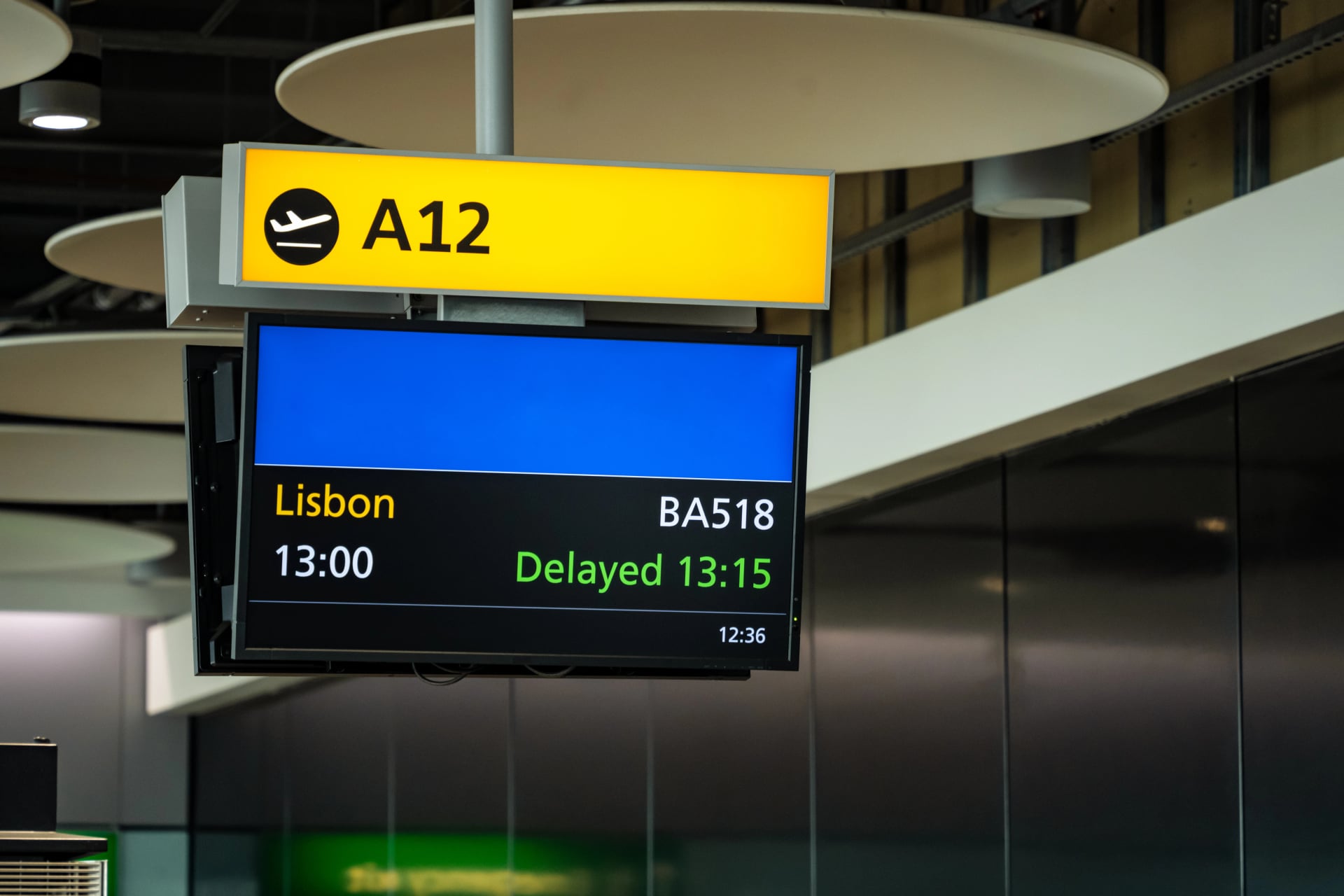
Porto: Northern Gateway (Most Popular)
By Air: Francisco Sá Carneiro Airport in Porto is Portugal's second busiest airport, located 11km northwest of city center. It offers extensive domestic and international flights via TAP, Ryanair, EasyJet, and other carriers. Transportation to city center:
Metro Purple Line (E) directly to city center (€2, 30 minutes)
Bus 601 or 602 (€2, 35 minutes)
Taxi or Uber (€20-25, 20 minutes)
The airport's proximity and excellent connections make Porto the most convenient starting point for most international pilgrims.
By Train: Porto's Campanhã station is the main hub for national and international train services. Well-connected to Lisbon (3 hours, €25-35) and Spanish cities. From Lisbon, trains run every 1-2 hours. São Bento station (city center) handles regional trains and connects to Campanhã via short metro ride.
By Bus: Porto's main bus station, Campo 24 de Agosto, serves numerous national and international destinations. Rede Expressos operates comfortable coaches between major Portuguese cities. FlixBus connects Porto to Spanish and European cities. From Lisbon to Porto by bus costs €15-20, takes 3.5 hours.
Getting from Porto Airport to Your Accommodation: The Metro Purple Line (E) runs from airport directly to city center, with stations at Trindade (main transfer hub), São Bento (historic center), and others. Purchase Andante card (€0.60) plus zone ticket (€2) at airport machines. The metro runs 6am-1am daily, providing convenient, cheap transport. Taxis and Uber cost €20-25 but make sense if arriving very early/late or with heavy luggage.
Starting from Spanish Border
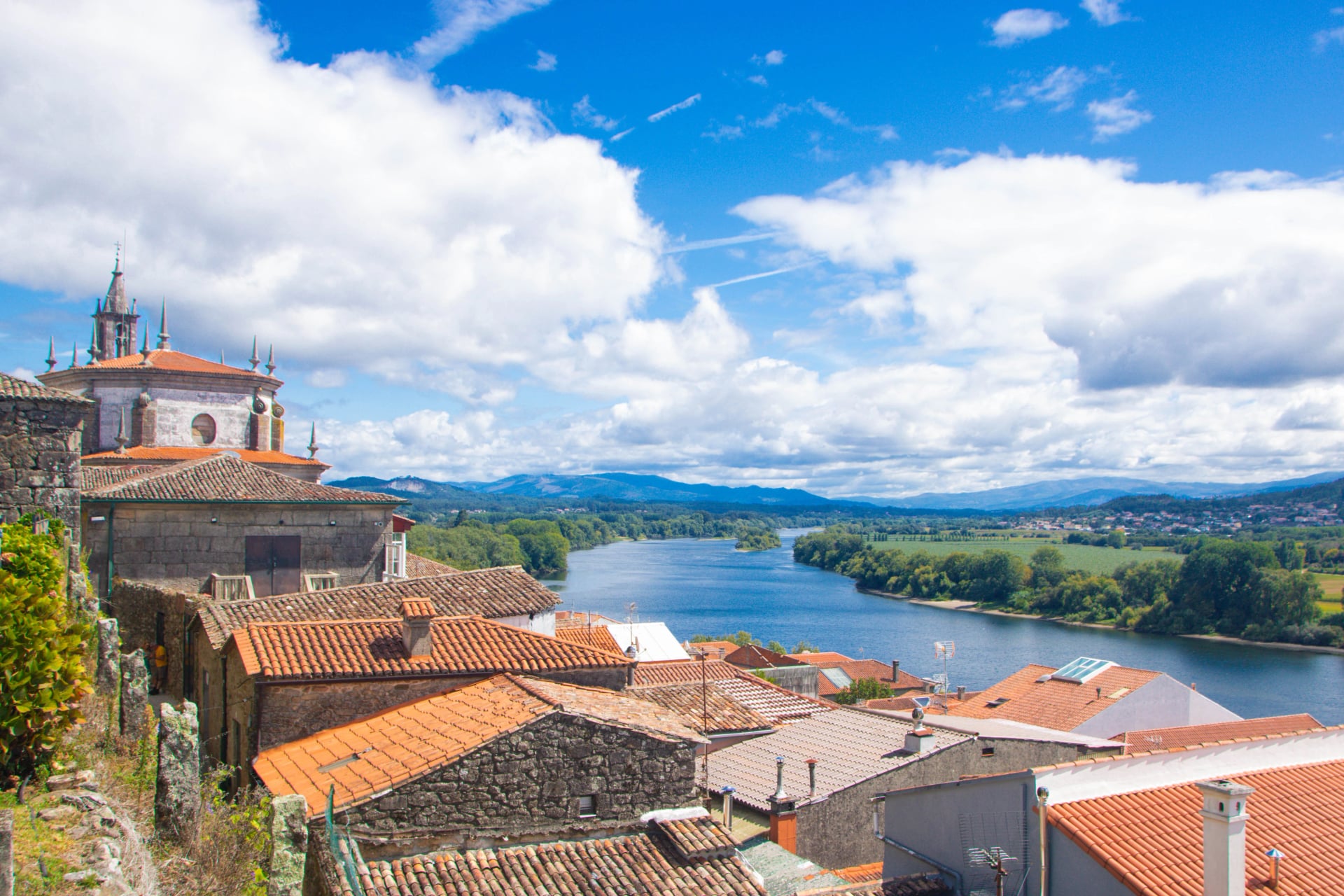
Tui/Valença (Central Route minimum): Accessible by bus from Santiago (€8-12, 2 hours) or Porto (€12-15, 2 hours). Trains serve Vigo (20 minutes south), from which buses connect to Tui. This works well for pilgrims wanting exactly the 100km minimum.
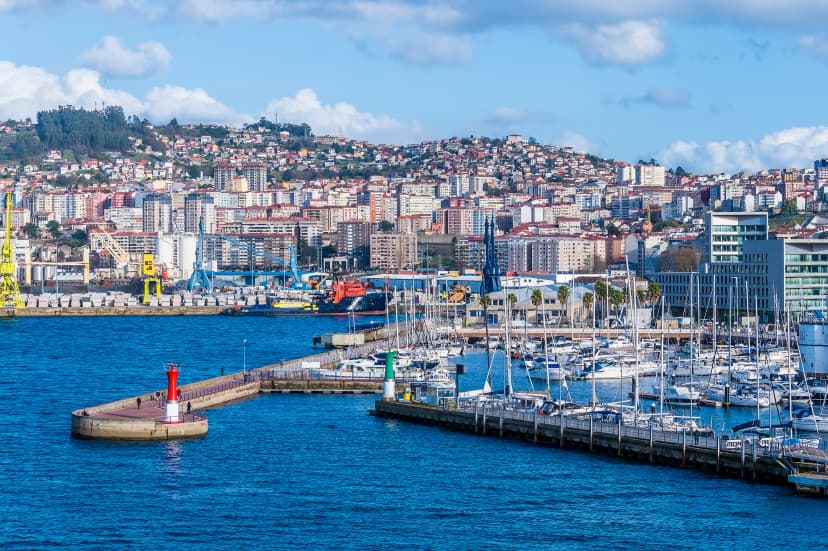
Vigo (Coastal Route minimum): Well-connected by train to Santiago (€7-10, 1.5 hours), Porto (€15-20, 2.5 hours), and Madrid (€35-50, 7 hours). Vigo's Peinador Airport serves limited domestic flights. The city makes logical starting point for one-week coastal pilgrimages.
For both Lisbon and Porto, public transportation proves convenient and efficient for reaching city center from airports or stations. Given the Camino Portugués's popularity, booking travel to these cities well in advance, especially during peak pilgrimage seasons (May-October), ensures better prices and availability.
Departing From the Finish Point: Santiago
After completing your pilgrimage, Santiago offers excellent onward connections to continue your journey or return home.
Santiago de Compostela Airport sits 15 kilometers northeast of the city center, functioning as Galicia's main air gateway. The airport serves both international pilgrims completing the Camino and travelers heading toward Galician coastal regions.
Getting There:
Airport bus (Freire company): Departs every 30 minutes from Praza de Galicia in city center
Journey time: 20-25 minutes
Cost: €3 one-way
Hours: 6:00am-11:30pm daily
Taxi: €25-30 to airport (20 minutes)
Uber/Cabify: Similar pricing to taxis
Flight Connections:
Ryanair, Vueling, and Iberia serve major European cities (London, Paris, Frankfurt, Zurich, Brussels)
Domestic flights to Madrid, Barcelona, Málaga, Palma de Mallorca
International connections typically route through Madrid or Barcelona
Book Spanish domestic flights early for best prices (€30-60 if booked ahead)
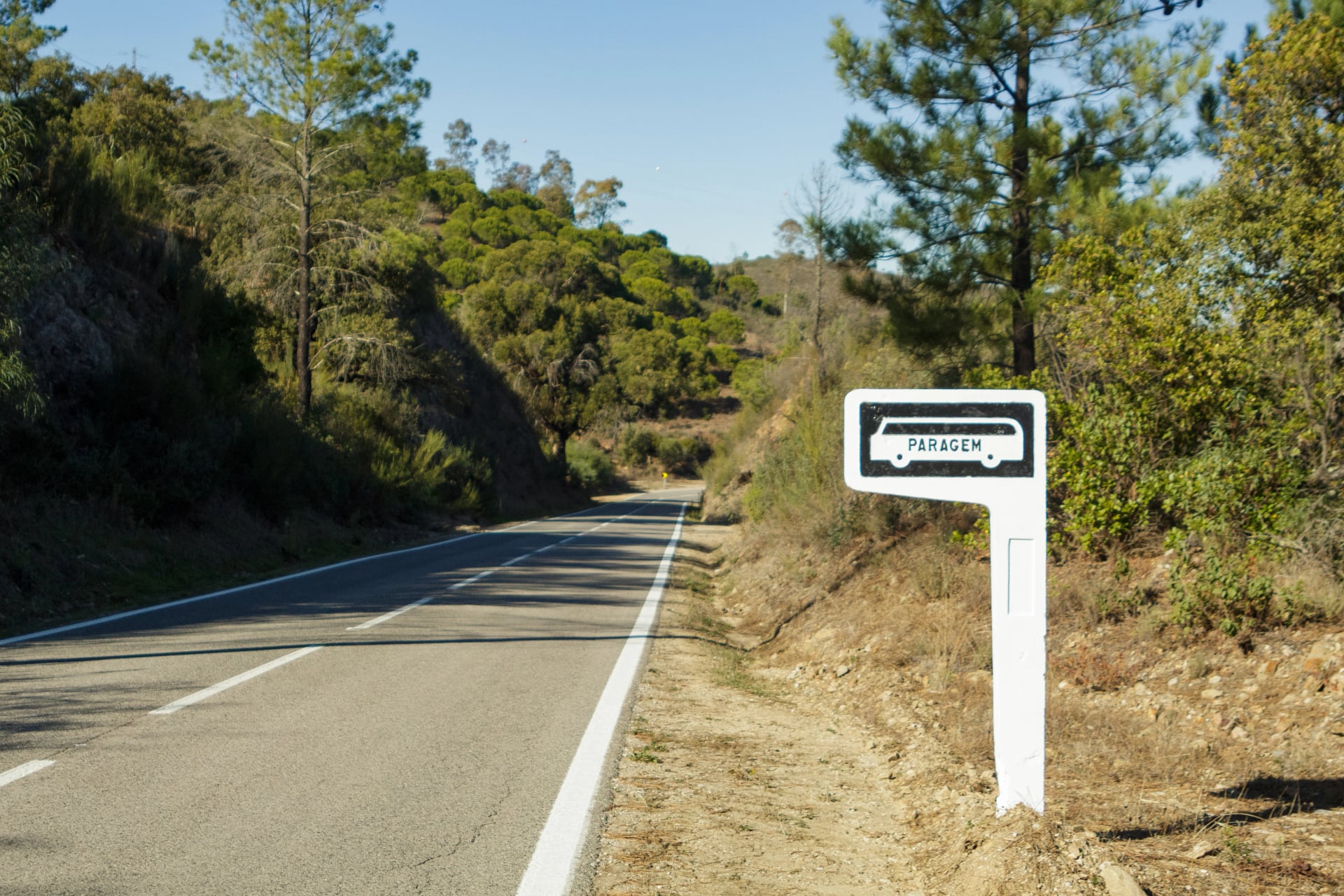
Santiago Train Station
Located 15-minute walk from the Cathedral (or short bus ride), Santiago's train station connects to major Spanish cities and Portuguese destinations.
Major Routes:
To Madrid: Alvia trains, 5.5-6 hours, from €25-60 (book on Renfe)
To Porto: Regional trains via Vigo, ~5 hours, €20-30 (connects Portuguese Camino)
To A Coruña: Frequent service, 30 minutes, €5-10
To Barcelona: Change in Madrid, total 10-12 hours
To Lisbon: Via Porto with connection, 8-10 hours total
Purchase tickets at station or online at Renfe (Spanish railways). Booking advance tickets for Madrid/Barcelona routes saves money and guarantees seats on popular departures.
Santiago Bus Station
The bus station sits 1.5km northeast from center (local bus #6 or €7 taxi). ALSA and Monbus companies serve national and international destinations.
Popular Routes:
To Porto: 4 hours, €20-30 (good for connecting flights)
To Lisbon: 10 hours, €40-50 (overnight buses available)
To Madrid: 7-8 hours, €35-50
To Vigo: 1.5 hours, €8-12
Buses often prove cheaper than trains for Portuguese destinations. Book online at on Alsa or Monbus.
End of the World Trail
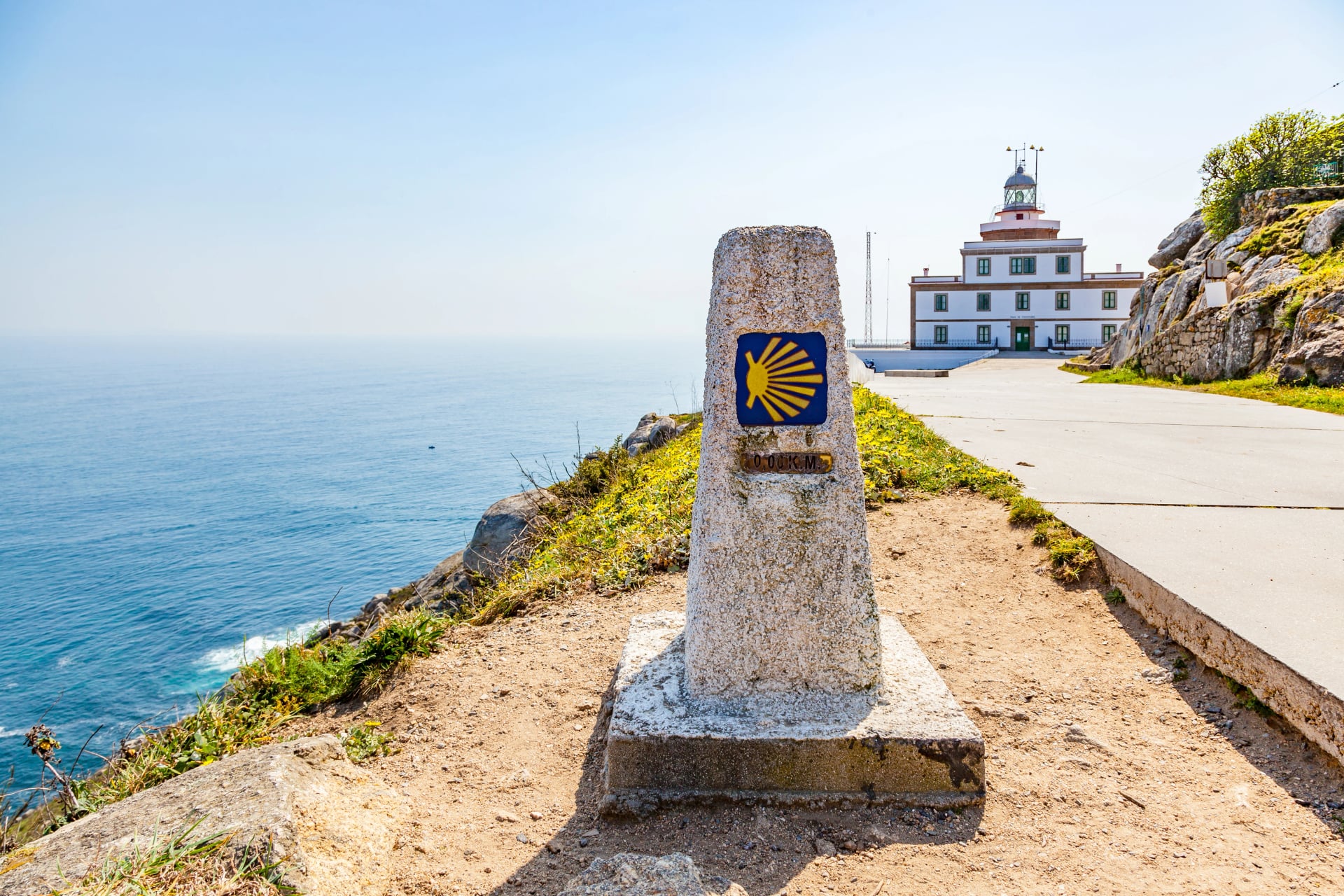
Many pilgrims extend their journey to Finisterre (End of the World), walking 3-4 additional days (90km) to reach the Atlantic coast where medieval pilgrims believed the earth ended.
Walking: Follow yellow arrows from Santiago westward through rural Galicia to coastal Finisterre. The extension adds meaning for many—processing the completed pilgrimage, transitioning gradually back to ordinary life, performing traditional rituals (burning old clothes at lighthouse, watching sunset over Atlantic).
Bus Alternative: Monbus company operates daily service Santiago-Finisterre (3 hours, €15-20). Departs from Santiago bus station mid-day, allowing morning in Santiago before departing. Returns available daily for those wanting just to visit Finisterre without walking.
Most pilgrims who walk to Finisterre describe it as essential completion rather than optional add-on—the coast provides closure the Cathedral sometimes doesn't.
Accommodation on the Camino
The Camino Portugués offers diverse accommodation options suiting various preferences and budgets. Understanding the differences helps plan appropriately for your pilgrimage.
Municipal Albergues (€10-15/night)
Basic pilgrim hostels operated by towns, churches, or volunteer associations:
Dormitory-style accommodation (bunk beds in shared rooms)
First-come, first-served in most cases (no advance bookings)
Pilgrim credential required to check in
Facilities: Shared bathrooms, sometimes kitchen, occasionally washing machines
Opens: Typically 1-3 PM
Quiet hours: 10 PM lights out, 6-7 AM checkout
Note: Portuguese municipals less common than Spanish—Portugal relies more on private albergues
Private Albergues (€15-25/night)
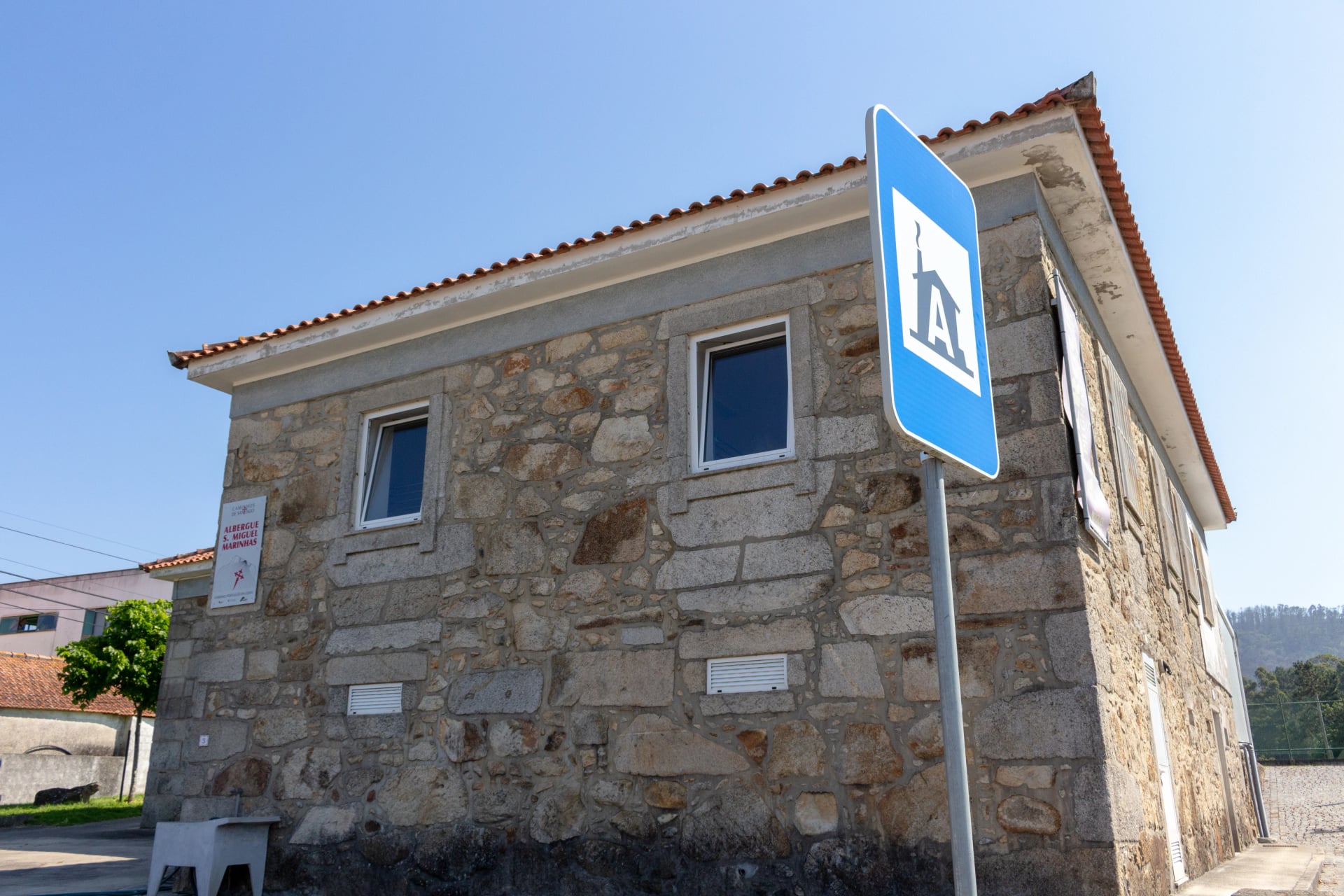
Privately operated pilgrim hostels offering better amenities:
Can book in advance (recommended in summer)
Better facilities than municipals (towels sometimes provided, better showers, comfortable common areas)
More services (breakfast options, luggage storage, laundry, detailed local advice)
Portuguese private albergues often family-run with exceptionally warm hospitality
Some offer communal dinners (€10-12) creating social atmosphere
Hotels & Pensions (€40-80+)
Private rooms for those wanting comfort:
En-suite bathrooms
Privacy and better sleep quality
Often include breakfast
Book ahead in peak season (May-September)
Best for rest days in cities (Porto, Viana do Castelo, Vigo, Pontevedra) or occasional respite from dormitories
Portuguese "pensões" and "residenciais" offer budget hotel alternative (€30-40 for private room)
Albergue Etiquette
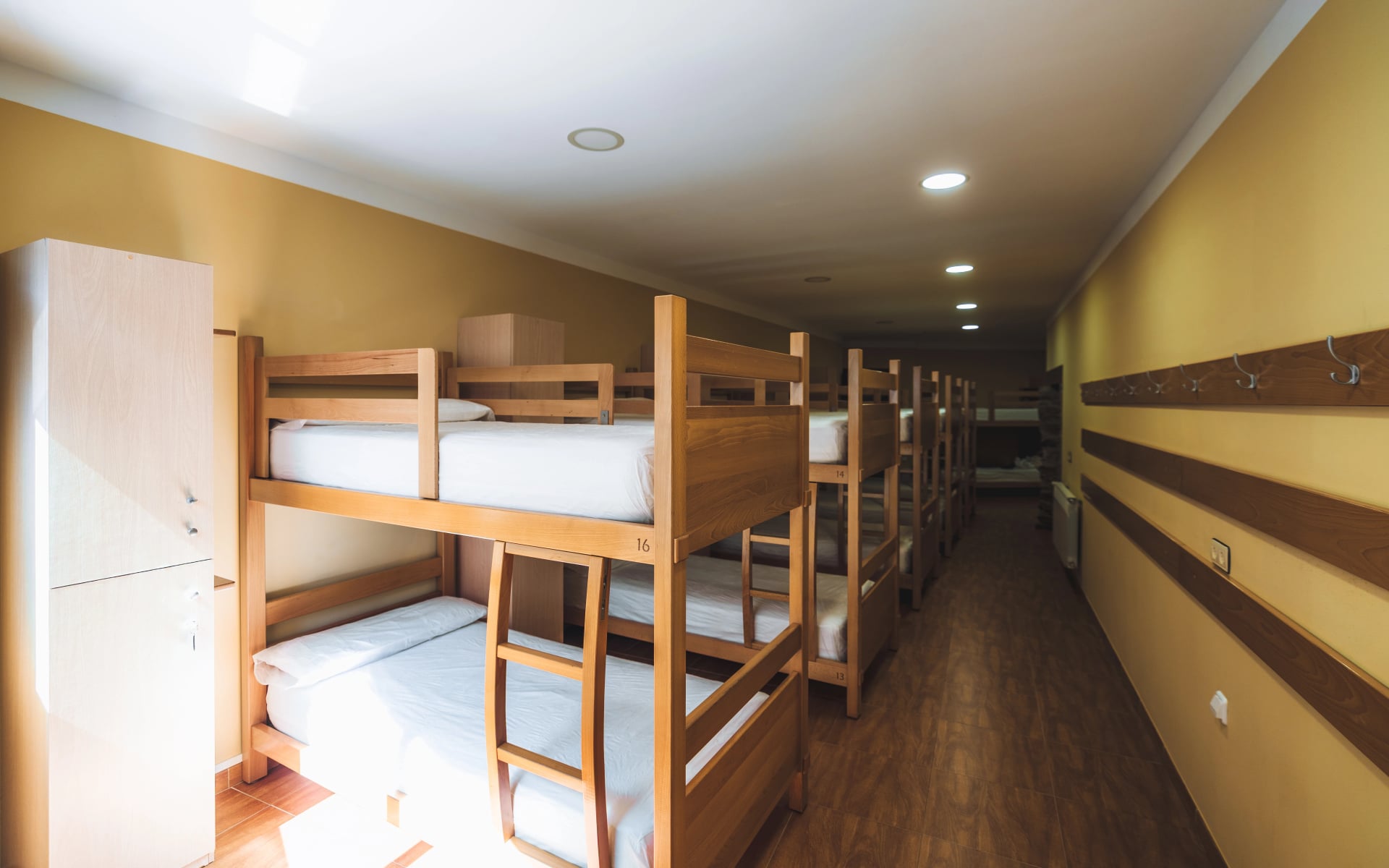
Universal rules maintaining harmony:
Remove boots immediately upon entering
Sleeping bag liner required in all albergues (purchase if needed, €5-10)
Pack backpack evening before for silent morning departures
Respect quiet hours (10 PM-6 AM strictly observed)
Headlamp essential for early departures without disturbing others
Don't use plastic bags (rustling drives dorm-mates insane)
Hang wet clothes in designated areas, not over others' bunks
Clean up after yourself in kitchens and bathrooms
Portuguese-specific notes:
Portuguese hosts frequently join communal dinners, sharing tables with pilgrims
Later quiet hours (10:30 PM sometimes) than Spain's strict 10 PM
More relaxed atmosphere generally, though respect still paramount
Booking Resources

For Portuguese sections:
Booking lists many Portuguese albergues and pensions
Central de Reservas — Portuguese albergue booking system
Direct phone calls often work—Portuguese albergues appreciate personal contact
For Spanish sections:
Gronze (Spanish site, limited English, but comprehensive listings)
Camino apps (Buen Camino, Wise Pilgrim) include accommodation with booking capabilities
Accommodation Strategy
Most experienced pilgrims recommend mix-and-match approach:
Stay primarily in albergues for social experience and budget
Schedule hotel nights every 5-7 days for recovery (Porto, Viana do Castelo, Vigo, Pontevedra)
Book ahead in cities worth exploring (arrive early, depart late, maximize cultural experience)
Walk-in for typical stages where flexible timing doesn't matter
The varied accommodation infrastructure supports different pilgrimage styles—from ultra-budget backpackers sleeping exclusively in municipals to comfortable travelers staying in hotels throughout. Most find the middle path—mostly albergues with strategic comfort breaks—creates sustainable, enjoyable journey.
Practical Tips
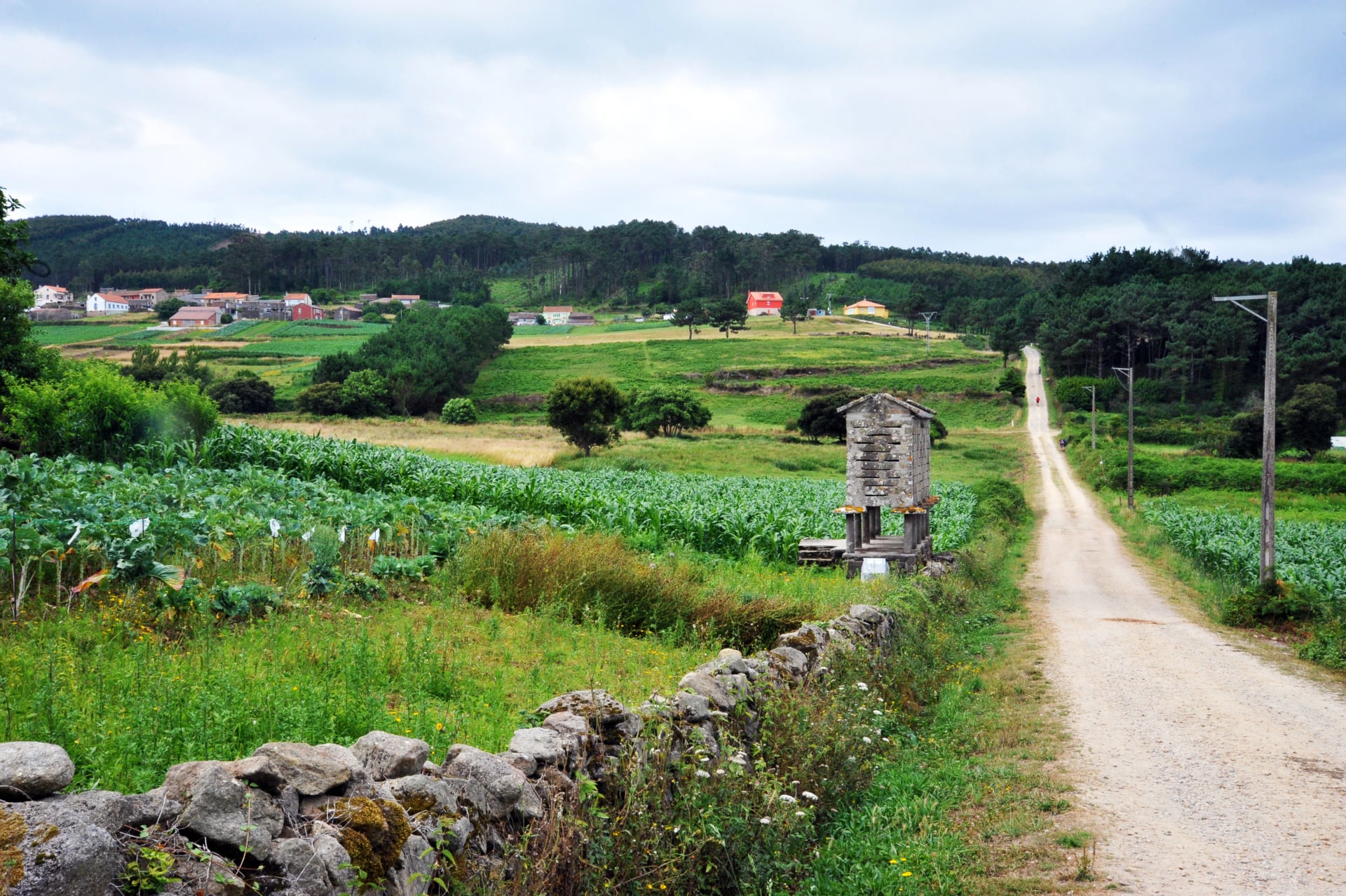
These practical insights, learned from thousands of pilgrims' experiences, help avoid common mistakes and enhance your Camino Portugués journey.
Portuguese Cafés Open Late: Unlike Spanish bars opening 7am for early pilgrims, Portuguese cafés rarely serve before 8-9am. This catches early risers off guard. Strategy: Carry breakfast supplies (fruit, nuts, bread) bought previous evening, or plan to walk first hour before coffee stop. Accept Portuguese rhythm rather than fighting it.
Ferry Crossing Requires Booking: The Minho River boat between Caminha-A Guarda requires advance booking (€6, 10-15 minutes). Book 1-2 days ahead through Xacobeo Transfer or Taxi Boat Peregrinos (contacts available at Caminha albergues). Off-season (Nov-March) the ferry doesn't operate—use bridge detour instead (5km extra). Tide-dependent: Departures adjust based on tidal conditions, so verify time morning of crossing.
Break in Your Footwear Thoroughly: Wear your boots or shoes for minimum 50-100km before starting. Portuguese coastal boardwalks seem easy, but even flat walking creates blisters in new footwear. Critical: Test your exact Camino footwear-and-sock combination on training walks. Blisters sideline more pilgrims than any other injury.
Two Countries, One Currency (Sort Of): Portugal and Spain both use Euro, but Portuguese prices run ~15-20% cheaper than Spanish equivalents for meals and accommodation. Budget €40-50 daily in Portugal, €50-60 in Spain. Tipping customs differ slightly—Portuguese expect small tips (round up, add €1-2), Spaniards don't expect tips for standard service.
English More Common in Portugal: Portuguese generally speak better English than rural Spaniards, easing first-time pilgrim anxieties. Portuguese education system emphasizes English; Spanish less so. However, basic Spanish phrases still essential for Galician sections: "Una cama por favor" (a bed please), "¿Cuánto cuesta?" (how much?), "Buen Camino" (good Camino).
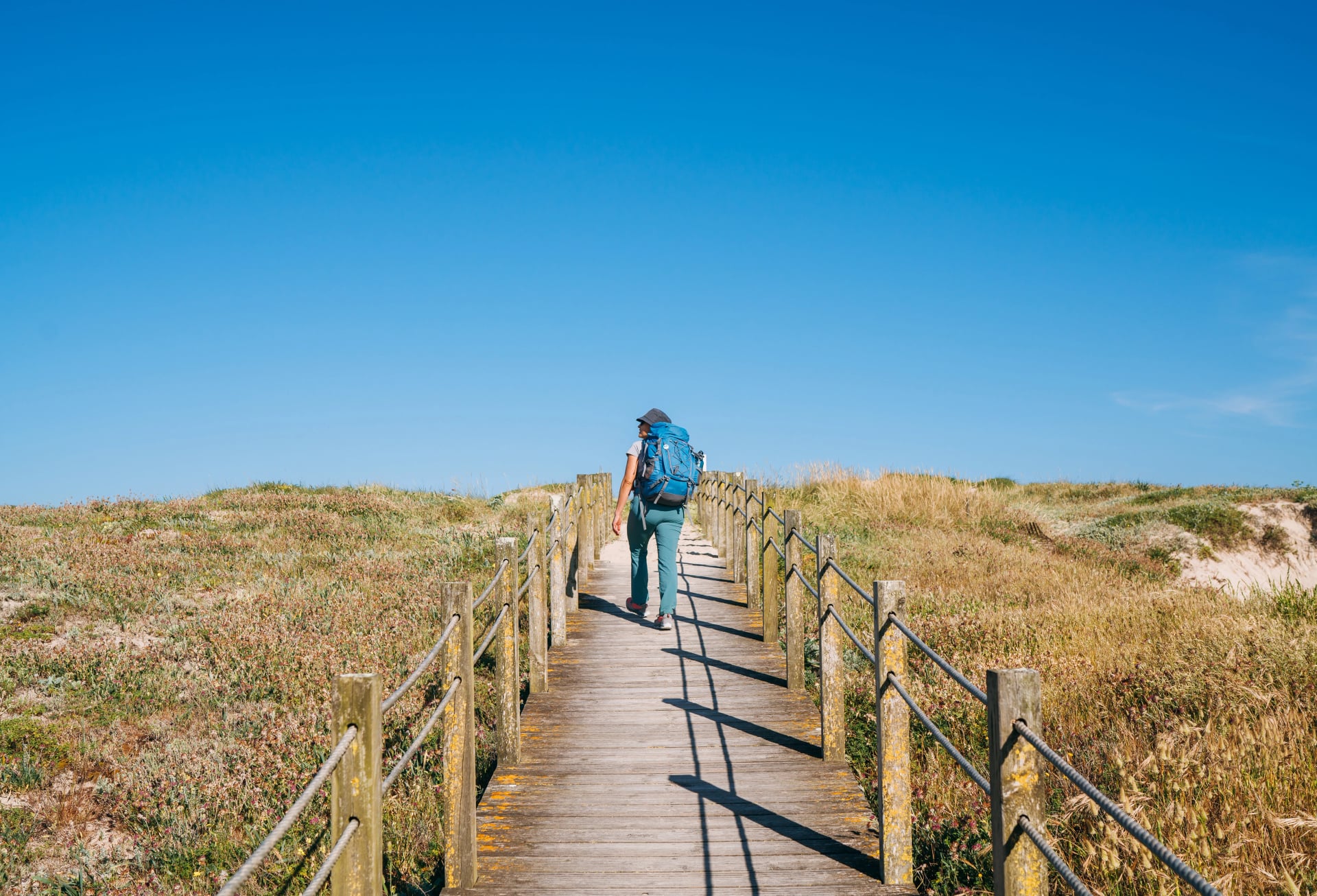
Coastal Weather = Wind & Sun Protection: Ocean breezes keep temperatures moderate but create persistent headwinds on some stages. Bring lightweight windbreaker even in summer. Coastal walking means intense sun exposure—reflected sunlight off water and sand causes burns pilgrims don't anticipate. Use strong sunscreen (SPF 30+), reapply every 2-3 hours, wear hat. Sunburn ruins Caminos far more easily than rain.
Coastal Boardwalks = Easy Walking: Wooden boardwalk sections provide flat, splinter-free surfaces protecting fragile dune ecosystems while giving pilgrims effortless kilometers. These are the Camino's easiest sections—enjoy them! Many pilgrims cover 25-30km coastal boardwalk days without significant fatigue, then struggle with 18km inland days featuring normal trail surfaces. The boardwalks spoil you.
Credential Stamps: Portuguese pilgrim offices and cafés provide more artistic, colorful stamps than Spanish equivalents—beautiful illustrations, elaborate designs, gold ink embellishments. Collect them enthusiastically! Your credential becomes art piece documenting journey. Some pilgrims carry two credentials to collect more stamps without overcrowding pages.
Start Early in Spanish Sections: Portuguese coastal walking benefits from morning sea breezes. Spanish Galician sections feature less wind, more direct sun. Start walking by 7:30-8am in Galicia to complete majority of distance before midday heat, especially July-August. Most pilgrims arrive destinations by 1-2pm, leaving afternoons for rest.
Don't Race for Beds: Despite stories of "bed races" on popular routes, accommodation exists for all pilgrims. The Portuguese Camino maintains excellent infrastructure. Yes, book ahead for peace of mind during busy weeks, but frantic rushing to arrive first rarely proves necessary. Walk at your natural pace, enjoy the journey, trust that a bed awaits.
Winter Walking: While coastal location makes year-round walking feasible, November-March sees frequent rain. Bring quality rain gear (jacket, pants, pack cover) and accept you'll walk wet days. Galician "orballo" (persistent fine drizzle) soaks you gradually despite seeming minor. Winter rewards those comfortable with wet, cold, solitude—but it's genuinely challenging, not just "slightly damp Camino."
Why Book With Us?
For those seeking more structured and hassle-free Camino Portugués experience, traveling with a hiking agency can be an excellent option.
We offer comprehensive services including:
Pre-arranged accommodations securing beds at quality establishments along your chosen route
Luggage transfer services allowing you to walk with just a daypack
Detailed route information including maps, GPS tracks, and stage-by-stage guidance
24/7 support throughout your journey for any questions or emergencies
Flexibility to customize itineraries matching your pace, preferences, and available time
Local expertise from our team's decades of Camino experience
Explore our camino tours to see how we can enhance your pilgrimage experience. Our services are designed to remove logistical stress while preserving the authentic independence and spiritual experience of the Camino.
Our Camino Portugués Tours
For those seeking structured and hassle-free Camino Portugués experience, our organized tours provide comprehensive support while maintaining the pilgrimage's independence and spiritual essence.
Our services include pre-arranged accommodations at quality establishments, daily luggage transfers, detailed route guides, and 24/7 support throughout your journey. Whether you choose the full coastal experience from Porto or the final 100km from Vigo, we handle logistics so you can focus on walking, experiencing Portuguese and Galician culture, and reaching Santiago de Compostela.
For more information or to discuss which option suits you best, visit our inquiry page or book a consultation with our team.


HASSLE-FREE
We handle itineraries, accommodations, and anything else you prefer not to deal with, so you can enjoy a carefree hike.
.svg)
TRIED & TESTED ADVENTURES
Only the best of Camino de Santiago, cherry-picked by our local team with an in-depth knowledge of the region.

SELF-GUIDED TRAVEL
Explore independently and with confidence while we keep everything running from behind the scenes.
.svg)
TRUSTED BY MANY
Since 2014, we have taken care of thousands of happy customers, making it our mission to put your satisfaction first.